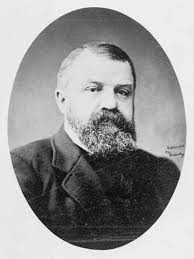
My name is Jeff and I'm a pastor of a small, local, Christian fellowship

It's a wonderful thing to love your work; to know that when you do it you are doing something that you were born to do. I am so fortunate to be both. I don't say I am the best at what I do. God knows that are so many others who do it better. But I do feel fairly lucky to be called by such a good God to do work I can only do with his help, to be loved by a beautiful woman, and to have a workshop where I can work my craft. These musings of mine are part of that work.
Powered By Blogger

Thursday, November 13, 2014

The gospel for nice people

Later Jesus and his disciples were at home having supper with a collection of disreputable guests. Unlikely as it seems, more than a few of them had become followers. The religion scholars and Pharisees saw him keeping this kind of company and lit into his disciples: “What kind of example is this, acting cozy with the riffraff?”

Jesus, overhearing, shot back, “Who needs a doctor: the healthy or the sick? I’m here inviting the sin-sick, not the spiritually-fit.” Mark 2:15-17, The Message

Since 2004, I have been a volunteer chaplain at the Barron County Justice Center. What that means is that for the past decade I have ministered at “the JC” most fourth Sundays of every month in the weekly worship services provided to the inmates there and then met with dozens of them in one-on-ones during the week. For the past year and a half, I have led a six-week study for men entitled “Courageous Living” (based on the movie Courageous) every quarter there as well. I've been to court numerous times on behalf of several inmates and met and prayed with some of the important people in their life.

I've spent a lot of time here
I got into it very simply: I volunteered. Late in 2003 as construction-phase of the new $22-million dollar Justice Center was nearing its completion then Director of Inmate Services, Sheree Carr was making the rounds to local ministerials essentially asking if anyone wanted to help provide for the spiritual care of the inmates once the place was up and running. Without even thinking about it, I said, “Sure.” Sheree took my contact info and sometime in 2004 when the church services began at the JC, I was assigned the fourth Sunday. It's been “our” day ever since.

Recently, a pastor-friend from Africa who was visiting us asked me, “And what has the fruit been?” It's a fair question to ask given that between weekly trips to the JC to either meet with inmates or lead a class, I've spent significant time there over the past decade. I wish I could have told him that “many” had been converted and “many more” had repented but frankly, I'm not good at lying. Ten years later I don't know how best to answer that.

I've met and prayed with dozens of inmates during the last ten years. I've shared the Scriptures, preached the Word, challenged, exhorted, and offered my handkerchief not a few times. Every time I lead a service (there used to be two large services, now there are three smaller ones) I give this standard invitation: “When you get out of here and if you're local, if you don't have a fellowship that you are already apart of, I invite you to check us out. We may not be your cup of tea but you're going to need people and its a place to start.” Over the years, some have taken up our offer and tried a Sunday or two but most do not stay for long. Except Scott, who was a part of us for maybe two years, but has since given up on “organized religion.” And Sean, who is now incarcerated again. And Troy.

His story has been a blessing to be a part of
I've written lots of posts about Troy. Over twenty years he was locked up in jail or in prison twenty times. And then there came that Sunday when his cell mate encouraged him to sign-up for church because it beat just laying on his bunk. I felt compelled to share my story that day and the result was that for the next three months, Troy and I had weekly conversations about spiritual matters. When he was released at the end of May, he was at Refuge the following Sunday and has pretty much been there ever since. Over the past three years, he made a public confession of Christ, got baptized, renewed his wedding vows with his wife, dedicated his grandson to the Lord, and has essentially become my right-hand guy in the ministry at the Justice Center. As the current Director of Inmate Services, Sandi Kodesh, a veteran correctional officer herself for 17 years told me just last week, “I would have never seen that coming.” Why, of course, because Troy's story is really a God-story.

So, I told my African brother, “Well, I've preached the Word, prayed with many, visited them while they were incarcerated and invited all of them to our weekly worship gathering.” “So, you are planting seeds,” was his reply. Yes – lots of them. Admittedly, I wish I could point to more fruit after ten years of sowing and watering.
Jesus came to set captives free. How can we do any less?
Sean is a guy who I met inside. Like Troy before him, we began a conversation during his last stint in the county jail. Unlike Troy, he had made a profession of faith years ago but had fallen off the wagon and returned to a life of abuse. After his release in May in 2013, he too began worshiping with us regularly. But everyone's journey is unique and his has been characterized by a lot more ups and downs. A year ago in January, I asked him to share his faith-story on Sunday morning. It was well-told and well-received and gave credit to where it belonged. But within the month, some things in his personal life surfaced and all this past winter and into spring he vacillated between faith and unbelief. Things were looking up for him in the summer but then he began to use again. By August he was picked up not only for using but with the intent of moving the stuff. I want to believe that real repentance is going on within him right now but truthfully, I just don't know. But God knows and he's still part of us so I see him regularly during which times we pray and read the Word together.

David is a guy I met inside as well. We met weekly for months on end and then he signed up for Courageous Living. Of his own accord, he stood to take “the Resolution” which the movie made famous (in evangelical circles, at least), he was made a trustee at the jail (basically the highest level of trust you can enjoy at the JC) and then, at long last, was granted Huber privileges. He got out on a Saturday. He visited us that Sunday but I was on vacation. He decided then he would skip church but one of the guys from Refuge encouraged him to stop in the next day as I would be back in the office. Within the next 24 hours he got himself high, stole a vehicle, led police on a chase and resisted arrest. The judge threw the book at him and he is currently serving eight years down state.

When I had returned from my vacation and heard that David had paid me a visit, I went up to the JC to get his forwarding address. That's when Sandi informed me what had happened. He had been out a little more than a day and managed to pretty much flush everything he had accomplished over the past eight months. As I walked back to my car, there is no other way to say it – I was pissed off. All that time visiting and praying with him had come to naught. Nada. Zilch. And in my heart I asked God, “Is the gospel only for nice people?” When I think of the make-up of Refuge, almost all of us (with the exception of Troy) are ex-something – ex-Catholics, ex-Lutherans (a lot of them), a few ex-Baptists, even. Our stories are similar: We were raised in a traditional setting, went to Sunday School, got confirmed but our hearts were stone cold. And then we met Jesus and were filled with his Spirit and nothing in the world could compel us to go back to the deadness we escaped from.

I do not mean to imply that everyone who chooses to worship in a traditional or liturgical fellowship is by definition “dead”; certainly there are a plethora of “dead” Pentecostals to be found scattered here and there among us. I just want to make a point that the majority of Refuge is made up of people who, before Jesus, didn't have the kind of bad habits that land you in the pokey. It's not that we didn't need saving – oh, we certainly did – it's just that the raw material the Lord had to work with had not already been corrupted by the kind of damage drugs and alcohol will do to the human soul. That brings me back to my lament in the parking lot of the JC - “Is the gospel, after all, only for nice people who just need a little cleaning up? Or is it, as Paul boasted it was, “God’s powerful plan to rescue everyone who trusts him” (Rom 1:16, Msg)?

But the first question of healing is "do you want to get well?"
At Levi's “going-out-of-business” banquet, Jesus serves as host entertaining Levi and a lot of the disreputable characters who were in his circle. Wining (yes, Jesus did drink wine as did pretty much everyone else in that neck of the woods at that time) and dining with this bunch created quite a buzz in Capernaum. A rabbi who was making headlines everywhere now suddenly is creating controversy by having dinner with the riffraff or so the local Pharisaic contingent claimed. In response, Jesus zings them with a truism he lifted right out of rabbinic teaching - “It is not the healthy who need a doctor, but the sick. I have not come to call the righteous, but sinners” (Mark 2:17, NIV).

I have terrible news, Mr. Larson. You have cancer and you have Alzheimer's.”

Well, Doctor, at least I don't have cancer.”

I got that out of Garrison Keillor's Pretty Good Joke Book and while it may be in bad taste I think it applies to this story aptly because who are the truly sick people in this story? Is it, as we usually think, the “sinners”, those not fully accepted by the religious folks of Capernaum or is it the “back-to-the-Bible” crowd whose scruples have been offended by Jesus for befriending such spiritual losers? Whatever else Jesus is implying it is definitely not that the Pharisees do not need “healing” because they are whole already. They, in fact, are the sickest people in town for not recognizing their condition. Augustine, in a letter to a fellow-bishop in the Fourth Century, refers to these particular Pharisees as suffering, in effect, from delirium, crazy with pride (Letter 157 to Hilarius), and totally unable to discern that their spiritual condition was direly terminal.

Of course the gospel works. What the guys in A.A. say about the program, I say about the gospel: it works if you work it. But the problem is too many of us are suffering from a spiritual dementia that keeps us from grasping how needy we really are, nice people sore in need of the grace of God to save us from the cancer in our soul.


Friday, October 10, 2014

The view from here twenty-three years later

Passing along the beach of Lake Galilee, he saw Simon and his brother Andrew net-fishing. Fishing was their regular work. Jesus said to them, “Come with me. I’ll make a new kind of fisherman out of you. I’ll show you how to catch men and women instead of perch and bass.” They didn't ask questions. They dropped their nets and followed.” Mark 1:16-18, The Message

A beginning is made by detaching oneself from all external goods: property, self-importance, social class and useless desire, following the holy example of the Lord's disciples. James and John left their father Zebedee and the very boat upon which their whole livelihood depended. Matthew left his counting house and followed the Lord, not merely leaving behind the profits of his occupation but also paying no heed to the dangers which were sure to befall both himself and his family at the hands of the magistrates because he had left the tax accounts unfinished. Paul speaks of the whole world being crucified to him and he to the world. Thus those who are strongly seized with the desire of following Christ can no longer be concerned with anything pertaining to this life, not even with the love of their parents or other relatives, insofar as this runs counter to the calling of the Lord.” Basil of Caesarea, 4th Century, THE LONG RULES, QUESTION 8

A week ago Wednesday (October 1) we marked twenty-three years in Chetek. For several years running I have made it a point to spend every October 1 in prayer and reflection. But this year I didn't even take the time to make a journal-entry. Here's how I spent the day:

A LITB classic, "In the Soup"
I awoke around 4 a.m. (which is my 'normal' these days) and spent the next two hours uploading pictures and updating the Chetek-Weyerhaeuser Cross Country Facebook page, my team's Fb page
Around 6 I crawled back into bed just to snuggle a little bit with Linda as she was trying to wake up only to fall back to sleep myself. By the time I awoke it was too late to go for my morning run.
About mid-morning I spent about an hour and a half at Roselawn Elementary reading in various classrooms
I enjoyed lunch with a number of the pastors in Chetek and New Auburn seeing this was our monthly ministerial gathering.
I did some devotional study following lunch.
After school I led our daily Cross Country practice, which on account of the rain, was held indoors.
Following practice, the team and I drove over to one of the kids' home for a team dinner.
After dinner I drove over to Refuge and while working on some things in my office had a couple of informal conversations with folks stopping in for our Wednesday night gathering.
For two hours, eight us of from our fellowship read through and discussed Mark 10-11 and concluded in prayer.
When I returned home at 9:30-ish, I spent the remaining hours of the day watching my regular Netflix diet of Leave It to Beaver episodes capped off by viewing the entire A&E miniseries “Bonnie & Clyde” in one setting.

They pay me to hang out with such great kids
That was my day: reading to kids, fellowshiping with pastor-friends, coaching Cross Country, reading the Word alone and with those with whom I journey with and a couple of hours of TV. This would read better if I said I spent the day in prayer and fasting or I had gone on a long walk along the Ice Age Trail to be silent before the Lord (like I did last year to mark our 22nd anniversary in Chetek). Perhaps it would have been better to do those things, too. And yet, many of those activities I engaged in are things I love to do – read to children, coach Cross Country, fellowship with my friends and comrades-in-arms in the Chetek and New Auburn communities, read and study the Word and, okay, watch the Beave as well. Each are an expression of my heart and I am of the opinion that these “passions” are like breadcrumbs to follow that ultimately lead to the things we should be about.


Lately, I've been studying the Gospel of Mark in both my private devotional time and together with a handful of people from our fellowship. As I read and reflect upon the lives of those first disciples and my own, I can't help but feel that I don't hold a candle to any of them – even the ones we know nearly nothing about like Simon the Zealot, Thaddeus and Bartholomew. Mark, whom many are persuaded was Peter's ghostwriter, simply tells us that upon hearing the call of Jesus Peter and Andrew “left their nets” (1:18) and began their discipleship with him. Down the beach from them the Brothers Zebedee one-upped them for when hearing the same call they not only left their nets, but their boat and their father, too (in the boat, no less) (1:20) and began to follow Jesus. Michael Card wonders if that was the last time they ever saw their dad given that we hear no more of him! In any case, each of them began their journey by turning their back on whatever had been their life before meeting Jesus. Those four, along with the eight others that in time would join their ranks, would spend the rest of their lives committed to the spread of his message (save Judas, of course.) And except for John, who suffered a lot for the Cause, died a martyr's death.

By comparison, my journey has been a relative breeze.

Packed to the gills
Twenty-three years ago we packed up everything we owned into a 24-foot U-haul (towing an 8-foot trailer) and our then station wagon including our two kids at the time, Christine (3) and Charlie (1) and moved 200 miles away from our families in the southern part of the State. Over the last two decades, we have bought a 100-year-old home and renovated it, added a couple more kids (Ed and Emma), and essentially lived the life that most rural people live in this part of the State – gardening in the summer, hunting in the fall, snowshoeing in the winter and then holding on for spring whenever it decides to arrive. As pastor of Refuge I have been about the kinds of things that pastors do regardless of their denominational affiliation – facilitate the weekly worship gathering, preside at weddings, baby dedications and funerals, visit and pray for the sick, teach and preach the Scriptures, pray and read my Bible. I've picked up a few part-time gigs along the way such as coaching Cross Country in the fall and track in the spring as well as serving as a substitute teacher at our local elementary school. For the past ten years I have been a volunteer chaplain at the Barron County Justice Center and for nearly twenty years I've made it my habit of reading to kids at the elementary school most weeks of the school year. Frankly, it's been a lot of fun.

What have I left behind?

I love serving with these people
For sure, choosing to accept the call to serve as pastor of what was then Chetek Full Gospel Tabernacle meant we were moving away from our families. Over the last 23 years we have missed out on a lot of family gatherings simply because they have usually happened on a Saturday or Sunday afternoon. Sure we usually get down for Christmas but only sporadically during the rest of the calendar year. But in return the folks at Refuge have become, like Jesus said about his followers, our brothers, sisters, aunts, uncles and relatives. To be sure, I miss seeing my folks and the rest of the Martin-Redders' clan but we have been greatly enriched by our family here.

"Big Red" keeps rolling
By accepting a call to pastor a small congregation in a small town in a relatively small corner of the State means I have accepted as well some limits to the salary I may hope to gain here. I'm making more now than I did my first year in Chetek but I haven't been given a raise in at least seven years and this year I had to accept a pay-cut simply because the money isn't there. Coaching adds a little to the pot as does substitute teaching but frankly after all these years we still live week-to-week. God has been faithful. We haven't had a car payment since the 20th Century: our 1995 Chevy conversion van keeps running and several years ago we were given a new-to-us Buick when my folks traded up. Since buying the house in 1993, both our folks have blessed us along the way with large donations that have allowed us to remodel several rooms in this old house of ours. And now that the kids are grown and away at school or living elsewhere, Linda works full-time at a local bank. All that to say that when all is said and done, we do okay. Whatever else our economic status may indicate we are definitely not “suffering for Jesus” in Barron County. This is a beautiful part of Wisconsin to be in and we live in a town where there are no traffic lights at all. Having lived in Milwaukee, Madison and the greater Chicago-land area in the past, that's something.

I don't live in fear that the local Muslims might bomb our Sunday morning worship gathering or terrorize the folks in our neighborhood. I have found the Somali of Barron to be generally hard-working people who for the most part keep to themselves. They've come to our county because the work is here and they don't like the gang violence endemic in the Twin Cities. That goes for the 800 or so Hispanic people who speak no English whatsoever that live in our county. I have found an open door at the schools to read to students or have lunch with them. Our city council meetings begin with an invocation – a decision unanimously adopted a year or so ago when the Freedom From Religion group out of Madison tried to intimidate local councils to cease and desist from engaging in such kinds of activity. I live in a peaceful, conservative neck-of-the-woods where everybody generally gets along. The worst that I can say about the non-church going public is essentially they are indifferent to those of us who choose to follow Christ whatever our affiliation may be.


Which brings me back to those first disciples. After Jesus' conversation with the wealthy young man which sent him away downhearted as he had been challenged to sell out entirely to the Gospel, Peter chimed in: “We left everything and followed you” (Mark 10:28 and Matthew adds that he also asked, What do we get out of it? Matthew 19:27). A fair question given what he had asked them to give up. And this is how Jesus responds,

Mark my words, no one who sacrifices house, brothers, sisters, mother, father, children, land—whatever—because of me and the Message will lose out. They’ll get it all back, but multiplied many times in homes, brothers, sisters, mothers, children, and land—but also in troubles. And then the bonus of eternal life! This is once again the Great Reversal: Many who are first will end up last, and the last first.” (Mark 10:29-31)

In other words, there will be lots of rewards to those who follow but for the most part they come later. Anything we get in terms of material blessings on this side of the Kingdom is pure gravy. When I think of the African and Asian brothers I have had the opportunity to meet over the past several years serving under far more economically challenging circumstances than myself I'm reminded yet again I do very well indeed.

So, I really have nothing to complain about. Twenty-three years after setting out on my (to date) first call my wife still loves me even though being a pastor's wife is a moniker she still often struggles with. My children walk with Jesus and have relatively escaped being afflicted with the PK-syndrome. We have a nice home, vehicles that run and genuinely enjoy a comfortable lifestyle. I have a place to work my craft as I seek to live and share the gospel and seek the shalom of the city the Lord has taken us to. By any standard, we are blessed in ways too many to count. I offer Psalm 16 as my prayer of thanks for God's goodness in our lives these past twenty-three years:


1 Keep me safe, my God,
    for in you I take refuge.
2 I say to the Lord, “You are my Lord;
    apart from you I have no good thing.”
3 I say of the holy people who are in the land,
    “They are the noble ones in whom is all my delight.”
4 Those who run after other gods will suffer more and more.
    I will not pour out libations of blood to such gods
    or take up their names on my lips.
5 Lord, you alone are my portion and my cup;
    you make my lot secure.
6 The boundary lines have fallen for me in pleasant places;
    surely I have a delightful inheritance.
7 I will praise the Lord, who counsels me;
    even at night my heart instructs me.
8 I keep my eyes always on the Lord.
    With him at my right hand, I will not be shaken.
9 Therefore my heart is glad and my tongue rejoices;
    my body also will rest secure,
10 because you will not abandon me to the realm of the dead,
    nor will you let your faithful one see decay.
11 You make known to me the path of life;
    you will fill me with joy in your presence,
    with eternal pleasures at your right hand. (NIV)


Wednesday, August 6, 2014

Channeling my inner Willie

"...They are more than a team...They are two comic shining lights that beam as one...For Lewis without Clark is like laughter without joy..."

WILLIE: I'm gonna tell you something now I never told you in my entire life. I hate your guts.
AL: You told it to me on Monday.
WILLIE: Then I'm telling it to you again.
from The Sunshine Boys by Neil Simon


"ENTER!"
Since 2003, I have been performing regularly at The Red Barn Theater just outside of Rice Lake. There's been a few summers I missed – 2004 and my sabbatical summer of 2010 – but for the most part every summer during the last eleven I have danced and capered about upon the stage constructed in this over a hundred-year-old barn. Pretty much all the characters I have played have been loveable and humorous ones – Harpo Marx (Minnie's Boys), Sydney Lipton (God's Favorite), Oscar Lindquist (Sweet Charity) to name three – supporting good guys the lot of them. Even the two crooks I've played – Fagin (Oliver!) and Rooster Hannigan (Annie) - are pretty likeable characters despite their penchant for shady business. But this season I have been cast as Willie Clark in Neil Simon's The Sunshine Boys. It's my first real lead and Willie is unlike anyone I've ever played before.

Burns and Matthau
The Sunshine Boys is about two former vaudeville partners – Al Lewis and Willie Clark – who toured together for 43 years as “Lewis and Clark.” During the last year of their partnership, however, they didn't speak to one another at all except on stage. When Al decides to retire from show business, Willie's career effectively ends as well way before he's ready for it to be over. Eleven years later C.B.S. is trying to get the team together again for a proposed TV special about the history of comedy and sparks fly from there. Willie is an aging recluse who's angry at Al for walking out on him, angry at his nephew and agent, Ben, for his inability to find him work, and angry at being out of the limelight. Essentially, he's just ticked off at the world and hates everything about getting older. In other words, a guy very unlike me.

Koslofsky and Martin
But when I showed up at auditions back in January, Rachel, the director, had Bill Koslofsky, a seasoned veteran of community theater in Barron County, and I read from a couple of pages from the script. Simon's show went from Broadway to Hollywood in relative short-order. It's the 1975 movie-version that put George Burns back on the map, revitalized his career and got him an Oscar to boot. I don't recall ever seeing the movie when I was a kid but the moment I read for Willie and Bill read for Al we had the same idea: we would love to do this but only if we could play opposite one another. A couple of days later it was official. I got the script a week or so later and fully intended to start memorizing lines shortly thereafter but there it sat pretty much unread until the week before practices began in late June.

I even got a chair like Archie's
Before reading the script, what little I had seen on YouTube and at Wikipedia suggested to me that Willie was perhaps slightly irascible, maybe a bit curmudgeony but otherwise a likeable guy. But upon reading the script and watching the 1975 version starring Walter Mathau as “Willie” opposite George Burns' “Al” several times, I didn't appreciate how ill-natured a character Willie is. He's quick-tempered, self-absorbed, profane, prejudiced in an Archie Bunker kinda of way – in other words, a terrible person. Every night that I deliver his lines that were written in the days when political correctness hadn't even been thought of yet, I get reaction from the audience: some gasp and while I can't see anyone's faces because of the stage lights I'm pretty sure there's a lot of eyebrowing-raising going on as in, “for real?” Almost every night of the run so far when I deliver the line about Frito Lays - “Maybe in Mexico that's funny, not here” - on cue someone in the audience clicks their tongue in disdain. (Can I help it if Simon wrote it that way?) But the main thing that Willie does is yell – he yells at the unseen kid at the desk in the lobby of the hotel at which he lives, he yells at his nephew, he yells at Al and he yells at the nurse sent to care for him after his – spoiler alert – heart attack. He's a loud-mouth, cranky old man venting his spleen on anyone who comes within shouting distance. Again, someone very much not like me.

Every night for nearly two hours I yell and carry-on like a lunatic – and Willie is as screwy as they come. (My favorite line in the entire show is delivered by my co-star, Bill. After Willie gloats in what he feels is sweet vindication at receiving a long-awaited apology Al says to him: “What did you get? You got no apology from me which you didn't accept.” Exactly). On the drive home, I'm usually pretty bushed and my vocal chords need a bit of a rest. I'm not an angry person. Sure, like anyone else, I get ticked off from time to time at slow-moving traffic and the dumbness of people in general. But I never realized until playing Willie how exhausting it can be to be so angry – even if you're just pretending! What's more, Willie has got inside my head a bit so that lately I find myself more tense, more frustrated at people, more quick to make judgmental statements about them (in my car, on my lawnmower, even on my early morning runs). Linda thinks some of Willie even leaked into my message last Sunday morning – egad! Get thee behind me, Satan (and Willie, too!)

I talked with my daughter, Emma, about these things yesterday. She's a theater major after all. I asked her how she plays characters that are slightly (or majorly) insidious. Her reply is that you have to be careful. You have to protect yourself. Last fall she played the inner voice that preyed on the fears of a 12-year-old girl. In the week or two before the run of their show, that voice started to prey on her own fears. Through prayer and the Word she shielded her heart but admittedly it wasn't easy.


For all that, it's a lot of laughs...

Frankly, when I started to try Willie on for size I had fun with it. I relished the idea of playing a guy so very unlike me. After all, I get to swear – in public, no less – without any feeling of guilt (it's acting, after all). But night after night after night of it – he's got to me a bit. I'm still glad and honored at the opportunity to do so and I think I've done a good job of it (or so say a lot of people; one lady told me she had seen this at The Guthrie and – her words - “You were as good – if not, better – than that guy's performance”) Maybe part of it is I don't like the fact that there's a bit of Willie inside of me – perhaps a few layers down – who while not as prejudicial as he is is very opinionated about the way certain people choose to live their lives. Usually I prefer to keep those thoughts to myself as no real good can come of expressing them out loud – especially the way he does it. But dang it, sometimes Willie just doesn't know his place.

Wednesday, July 9, 2014

In search of 2 Acts: A meditation on Acts 28:30-31

The author working on 2 Acts?
Paul lived for two years in his rented house. He welcomed everyone who came to visit. He urgently presented all matters of the kingdom of God. He explained everything about Jesus Christ. His door was always open.” Acts 28:30-31, The Message

Whatever be the truth, the fate of Paul is secondary to that of the gospel. The final picture is of Paul preaching to the Gentiles the same message which he had preached throughout Acts with boldness and without hindrance. All the emphasis lies on that last phrase...Nothing that men can do can stop the progress and ultimate victory of the gospel. I. Howard Marshall in Acts: The Tyndale New Testament Commentary Series


A companion in the journey

And so the Book of Acts ends. Is it “The End” or, more properly, “The End?” In my year and a half personal study of The Book of Acts I have enjoyed the company of fellow-travelers who have accompanied me along the way – John R.W. Stott, I. Howard Marshall, Ajith Fernando, Sir William Ramsay, Paul Maier and a few of the Church fathers (mainly, Chrysostom) – serving at times like experienced tour guides pointing out things a novice like myself might have overlooked. Their observations have been insightful and helpful in understanding the work and I come away with a far more appreciation for it. It is definitely far more than just a history book. Good scholars that they are at times they have disagreed with one another, arriving at different conclusions about certain events in the story.

Certain that Luke was planning a third installment
Take, for example, the “abrupt” conclusion to the book itself. Sir William makes a strong case that Luke had always fully intended on writing 2 Acts but was prevented from doing so because of his premature death in the same persecution that ultimately claimed Peter's and Paul's life. Stott, Marshall and a whole lot of others who know their stuff counter that the enigmatic ending was Luke's intention all along: the great Story begun in Acts 1:8 will continue until its consummation at the End of the Age when the Lord Jesus returns as promised. Maybe both groups are right – while Luke had planned to write about what happened after Paul's release from his two year house arrest in Rome and the rest of his travels to Iberia and back unto martyrdom, Luke would have most likely ended his second treatise on a high note: the Founders may be gone but the Gospel continues to be carried forth into all the world.

Did he find out about the rain in Spain?
Maybe the question to ask is not Why does it end so abruptly but How does the abrupt end make me feel? After all that Paul has been through to get to Rome – getting nearly lynched in Jerusalem, the two-year house arrest in Caesarea which included several hearings beforeboth Jewish and Roman officials, the harrowing journey to Rome and at long last arriving there only to discover the same obstinacy among his Jewish brethren there as he found back in Palestine – is this really how his story should end? It leaves me wanting to know what happened to him, specifically with his hearing before the Roman Senate? As some speculate, was he released? And did he make his trip to Spain? Or did his two-year genial house arrest in Rome take a drastic turn due to the madness of Emperor Nero which led to his speedy demise and martyrdom? Whatever happened to Luke? Did he, as I have already speculated, die in the same wave of persecution that claimed the lives of Paul and Peter? Or was that his intent all along - to leave us hanging so that we would put ourselves in Paul's shoes and carry on what he and the other apostles began?

Frankly, after a year and a half of ruminating on this text I don't want it to end. I want to hear “the rest of the story”? I want to read Luke's proposed “third installment” even if he never intended on writing one. What's odd to me is that after my year-long sojourn in the patriarchs in 2011, I was eager to return to the study of Jesus as told by Luke in 2012. But now after a year and a half in Acts, I am hesitant to leave the study of Paul, Peter, Luke, Timothy, Aristarchus and all the brothers. Not because I don't think I need to learn more of Jesus – God knows I do – but simply because I have grown attached to these guys and their daring and their resolute determination to carry the gospel to the ends of the earth. I want to know what happened to them, what they accomplished and their end. I think that's why I began reading Eusebius (The Church History) - out of the desire to learn of the fates of the men who followed in the path of Peter and Paul who in turn were following Christ.

Which brings me back to the idea of a Third Volume. I want the story to continue. And maybe that is the genius of Luke in the choice of his ending – it makes you want to look for more installments. And ultimately you do find them but not within Scripture so much as in the lives of those who have gone before us and those who continue to carry the gospel (myself included) up to the present time. Like Lloyd Oglivie once wrote, “The abrupt ending leaves us with the challenge and opportunity to allow the Spirit to write the next chapter in the Book of Acts today in and through us!” I pastor a small fellowship in a small town in a county in our State not known for its economic power nor political clout. But it's the place where he has planted me and to the best of my ability I will continue to preach the Scriptures, baptize and teach disciples and do all the regular kinds of stuff that come with the territory of gospel work. One day another will carry on the work I do now and within a few years after my departure to another post or to my inheritance, my name will be less known but Lord willing, the gospel will continue to be preached at the fellowship that currently meets at the corner of 8th and Leonard in Chetek. It's how it should be. Like Frodo reminded Sam while they were ascending the steps of Cirith Ungol that while the great tale never ends “...the people in them come, and go when their part's ended. Our part will end later – or sooner” (“The Stairs of Cirith Ungol” in The Two Towers). Until that time, may I be found faithful and play whatever is my part to play in the greatest Story ever in the making.


Dr. Paul Maier's conclusion of his little book First Christians is a fitting conclusion to my devotional study of Acts:

All of the apostles endured great hardships for the faith, many suffering martyrdom itself. Not one of them could see the ultimate triumph of Christianity – except through the eyes of faith and the inspiration of the same Spirit who arrived with the first Pentecost and never withdrew. Though at the time the Christian cause seemed persecuted, burned, crucified, beheaded, and even eaten out of existence by the greatest power in the world, a greater power was at work that would see Christianity conquer Rome a little more than two centuries later, and “the ends of the earth” after that, in Jesus' own prediction.”

It was Christ, not Caesar, who captured the future.”


Wednesday, July 2, 2014

I'm a front-line worker, too

Paul walked here
And so we came to Rome. The brothers and sisters there had heard that we were coming, and they traveled as far as the Forum of Appius and the Three Taverns to meet us. At the sight of these people Paul thanked God and was encouraged.” (Acts 28:14, NIV)

At the forty-third milestone was a place called Forum of Appius. Both here and ten miles farther on at a village named Three Taverns, Paul, Luke, and Aristarchus were happily surprised to find a delegation from the Christians of Rome. The church there had been alerted to his arrival, and possibly many of the names found in Roman 16 were clustering along the sides of the Appian Way in a grand welcoming committee. What enormously cheered the travelers must have astonished Julius.” First Christians by Paul L. Maier

Like all pastors, I get a lot of mail from ministries of various causes and opportunities appealing for my money, prayer and whatever else they think I can offer them in their hour of need. Yesterday I opened a packet from a respected ministry which had a cover letter that had in large bold letters at the top -

Adopt a Front-Line Worker

This particular ministry is an advocate for the persecuted Church and I'm sure they do a lot of good stuff. And I get what they're trying to do – round up people who will pray and, if possible, give to a gospel worker in countries considered closed or hostile toward the gospel. I have no problem with that. What I take issue with is the phrase “front-line worker”. It makes me think of an evangelistic outreach that a number of fellowships in our area partnered together with back in the mid-90s. It was a worthy cause, the church who hosted the event was packed out nightly and several individuals made professions of faith. But every night, right before the offering was received, the leader of the traveling ministry would proudly tell us that his ministry was a “front-line” ministry and that our dollars were helping move the gospel forward. I'm sure they were. And I'm sure he and his associates used the money for the cause they said it was for. But that phrase - “front-line ministry” - stuck in my craw. Because the implication was that other ministries – specifically, my ministry with its hum-drum Sunday to Wednesday to Sunday rhythm was...well...not the front-line. I was “playing” while he and his team were “fighting”. I was working a garbage scow on the back-waters of the Pacific while he was in harm's way in Leyte Gulf.

Okay, maybe it was what he was taught to say by the larger ministry he worked for. Or the packed house and the eager and willing response of the crowd got him a little carried away in the moment (but night after night after night?) I wouldn't be surprised if some of those same folks who heard that appeal took money they otherwise would have normally given their fellowship and gave it to this guy and his “front-line” work. After all, if you give it to your local fellowship some of your offering may just go to pay the light bill whereas supporting a “front-line” worker doing “front-line” work advances the kingdom “in the trenches” where the real “fight”is at (or so some folks would be inclined to believe.)

But in the Kingdom of God, where is the “front-line”? About a hundred years ago when doughboys from America marched off to France to beat back the Hun they sang the ballad by George M. Cohan, “Over There”

Over there, over there,
Send the word, send the word over there
That the Yanks are coming, the Yanks are coming
The drums rum-tumming everywhere.

If you don't have an aversion for this kind of music, it's the kind of song to get you marching somewhere, preferably to the “front lines” to resist the evil empire that threatens to subdue freedom-loving people everywhere. In a similar way, when we pray over someone bound for the mission field in what used to be called “darkest” Africa it is fairly normal to think of these individuals as some elite squad being inserted deep behind enemy lines for the saving of many Private Ryans while we carry on with our quiet but otherwise mundane lives back in the States. Except for this – it doesn't wash with the record of Scripture which says that the so-called “front-line” is not over there but everywhere. Which means all of us – not just the traveling-evangelist type or the missionaries bound for war-torn South Sudan – are engaged in the epic struggle to advance the Kingdom of God to the ends of the earth.

A novel Church growth plan
Following the martyrdom of Stephen in the mid-30s, life in Jerusalem for disciples of Jesus was chaotic. Saul is on a rampage rounding up followers of the Messiah everywhere he finds them. Most don't stick around to give him that pleasure but do what people have always done in times like this – get out of Dodge.

Forced to leave home base, the followers of Jesus all became missionaries. Wherever they were scattered, they preached the Message about Jesus.” (Acts 8:4, Msg)

They were running for their lives but they weren't mum of why they were fleeing. They didn't seek to keep a low profile. They shared the faith and spread the Word. The irony is palpable – even while he is trying to stomp the movement out Saul is inadvertently helping it spread. As merchants and traders wherever they landed they found opportunity to share about Jesus the Messiah. Some time later when the dust settles and Peter and John are sent down to Samaria to confirm the rumors that many in this region have received the gospel, they find that Philip, a former associate of Stephen's, and others like him have been here for awhile working the Samarian fields. All that's left for the apostles to do is lay their hands on these new Samarian disciples and affirm God's work and impart Spirit baptism (see Acts 8:14-17).

Some of those unnamed missionaries from Jerusalem got further afield than Samaria, however.

Once a hub of the Christian movement
Those who had been scattered by the persecution triggered by Stephen’s death traveled as far as Phoenicia, Cyprus, and Antioch, but they were still only speaking and dealing with their fellow Jews. Then some of the men from Cyprus and Cyrene who had come to Antioch started talking to Greeks, giving them the Message of the Master Jesus. God was pleased with what they were doing and put his stamp of approval on it—quite a number of the Greeks believed and turned to the Master.” (Acts 11:22-24, Msg)


When the home office hears about the strange happenings in this city in what is today southern Turkey they deputize Barnabus to go up there and investigate. What he finds there is a thriving fellowship of believers that is having influence in their community without any help from the apostles in Jerusalem. In time, he'll recognize that they need the help of a good teacher and will go in search of Saul the former persecutor and invite him to return to Antioch to join the ministry there. But the point is way before Barnabus or Saul arrived “over there”, the battle for Antioch was being capably handled by men whose names we'll never know.

Years later when Paul at long last arrives in the capital city of the Empire he doesn't come as a master tactician ready to take the fight to the pagans there. On the contrary, he comes as a prisoner who is warmly greeted by a large delegation of disciples of the Church of Jesus in Rome who have heard rumors of his arrival. Long before Paul and later Peter arrive in the Capital, unnamed disciples had beat them to it and were gathering together regularly to strengthen and encourage one another. 

A few of the Church's greatest hits

He was all the rage in his day
   
There will always be men and women who God raises up to articulate his message for a certain time and hour. We'd be tempted to call them “stars” if it weren't so unbiblical – Peter, Paul, John, Origen of Alexandria (3rd Century), Augustine (4th Century), St. Benedict and St. Patrick (6th Century), Bernard of Clairvaux (12th Century), Martin Luther and John Calvin (16th Century), George Whitfield and John Wesley (18th Cenutry), William Carey, Adoniram Judson and Hudson Taylor (19th Century), Billy Graham, Loren Cunningham and Keith Green (20th Century). For a short time they and a lot of others I haven't mentioned captured the attention of their generation and were in the spotlight, front-liners the lot of them. But for every D.L. Moody who barnstorms across the Midwest all the way to England proclaiming the gospel to packed houses and theaters there are how many other Sunday School teachers quietly sharing the love of God with the kids in their Sunday School class? In the late 1800s, Moody was a household name in evangelical circles but who had heard of Edward Kimball who had been Moody's Sunday School teacher and had been the very first to share the gospel with him? In the late 20th Century Billy Graham was pretty much everywhere sharing the gospel to packed auditoriums in city-wide crusades. Who didn't at that time turn on the television only to find that their regular programming had been preempted by this evangelist from North Carolina who was calling people to repent and be born again? But who remembers Albert McMakin, the farmhand on the farm that Billy grew up on who finally persuaded his boss' son to come to a series of revival meetings by promising he could drive the truck? Billy did and though he was a Presbyterian went forward to receive Christ. Who can tell how that brokered deal between McMakin and Graham has influenced the course of history?

His name will live on
Definite front-liners
That story has occurred repeatedly throughout the history of the Church and will continue to be repeated until her consummation. In the congregation I serve as pastor there is a couple who have been serving with Youth With A Mission for over twenty years now. During that time they have led many schools in Hawaii, the Philippines and now northwest Wisconsin. Many of their former students are missionaries themselves now in Asia and many other places in the world. In the 1980s they were farming south of Chetek and Duane was pastoring a small fellowship in nearby New Auburn. Following the tragic death of Keith Green in 1982, there were a series of memorial concerts all across America. Duane and his wife, Lois, attended one of them and though they were serving Jesus as both farmers and individuals serving a local fellowship they stood when the invitation was given to go wherever the Lord would lead them. The way Lois describes the moment it was almost impulsive but standing up in that meeting has led to a life of ministry to foreign nationals in places in out-of-the-way places like Dbunko, Palanan, Philippines and Weyerhaeuser, Wisconsin. Believe me, they, too, are front-liners. Their faithfulness and obedience has led to the advancement of the Kingdom of God as well. They just don't get the press that Franklin Graham or Bill Hybel does.

So we can go ahead and adopt that “front-line” worker in the County of Timbuktu if we feel so inclined so long as we don't forget that wherever we are – in Chicago, in Minneapolis or in Chetek, Wisconsin or Wairaka, Uganda – the front line is not “over there” but right here if we have eyes to see it. All the more reason to take the Apostle Paul's words to heart, to “...don’t hold back. Throw yourselves into the work of the Master, confident that nothing you do for him is a waste of time or effort” (1 Cor 15:58, Msg). I wholeheartedly agree.