My name is Jeff and I'm a pastor of a small, local, Christian fellowship

It's a wonderful thing to love your work; to know that when you do it you are doing something that you were born to do. I am so fortunate to be both. I don't say I am the best at what I do. God knows that are so many others who do it better. But I do feel fairly lucky to be called by such a good God to do work I can only do with his help, to be loved by a beautiful woman, and to have a workshop where I can work my craft. These musings of mine are part of that work.
Powered By Blogger

Sunday, March 5, 2017

"...and the Glory of God filled the Dwellling" (A meditation on Exodus 40:34-38)

“The Cloud covered the Tent of Meeting, and the Glory of God filled The Dwelling. Moses couldn’t enter the Tent of Meeting because the Cloud was upon it, and the Glory of God filled The Dwelling.”
Exodus 40:34-35, The Message


My thirteen and a half month study of the Book of Exodus ended yesterday. Since mid-January of 2016 until yesterday morning I have slowly plodded through its pages, musing on the old story once again. On my journey I was accompanied by Biblical scholars Walter Kaiser Jr., R. Alan Cole, J.A. Motyer and John Mackay as well as several others who contributed to my meditations – Kathy Lee-Thorp, Meindert DeJong, Thomas Cahill, Bruce Feiler and Walter Wangerin, Jr. The principal story line of Exodus I have known since my youth and flannel graph days – the people in slavery, the plagues visited upon Egypt, the Red Sea crossing, the receiving of the Ten Commandments, the Golden Calf and the construction of the Tabernacle – but just like I have found with the rest of the Scriptures, the Word is indeed “living and active”, so that every time you read it the potential is real to see something or hear something new that you hadn't seen or heard before. Such was the case with this read-through.


When I attended Bible college back in the early 80s, I didn't attend a school that embraced the JEDP-theory of the Pentateuch (essentially the belief that the first five books of the Bible were derived from several different sources instead of being composed by one author) but we had to, at least, be familiar with the idea. Having it be the source of my devotional life for a little over a year I am now more persuaded than ever that at least with Exodus, the book is a unity. I am no scholar by any stretch of the word but the themes of the book are consistent and seem to flow from one mind, one individual who was chosen for a remarkable task.

The Book of Genesis opens with creation and all its splendor, portraying humanity as it was always meant to be. It ends with the fateful words “...he was placed in a coffin in Egypt” (50:26). The story of Exodus begins where Genesis left off – in Egypt but the people who once sought refuge there had become enslaved for hundreds of years. By the end of the book the people are in the wilderness of Sinai, now free and in covenant with Yahweh with the glory of the Lord filling the Tabernacle. They
haven't just moved geographically. It's a brand new day, a new beginning. The verbiage of Exodus 39 has echoes of Genesis 1 in it – “God saw all that he made, and it was very good” Gen 1:31 compared with Exodus 39:43, “Moses inspected the work and saw that they had done it just as the Lord had commanded. So Moses blessed them.” I'm told by people who study such things that this is intentional.


J.A. Motyer writes of the “clouds” of Exodus:

And even more significant inclusio looks back to the first chapters of Exodus. There is no verbal reference to a 'cloud' in 1:1-2:10, yet we could not expound that passage without reference to 'days of darkness' and 'to living in the shadows.' It was, indeed, such a time. The dark shadow of enslavement lay upon the people of God, the bitter cry of bereavement as their sons were snatched from them for the river, the blows of the taskmaster, a future without hope, and the relentless, uncaring policy of genocide. They were at that time a people under a cloud, even if the text does not expressly say so. Now, at the end of the book, they were again a people under a cloud, this time the cloud of the Lord, the signal of his presence in glory, holiness and grace. Between these two clouds the Sovereign Lord of the whole earth had routed all the power of the enemy, granted his people deliverance, brought them to himself by the blood of the lamb, graced them with his directive law and come, in the fullness of his person, to take up residence in their midst as their indwelling God. This is the whole story of the book of Exodus.
The Bible Speaks Today: The Message of Exodus by J.A. Motyer, pp. 325-26


I think on that day that Moses inspects all that had been constructed (Exodus 39:32-43) – the furniture that will be in the Tent including the ark and the altar of incense, the tunics that the priests will wear and the special vestments for the high priest, the curtains and the stands that will hold up the Tent, and all the other special equipment. Like some agent of the FDA inspecting food, slowly Moses makes his way around the plot of ground where the articles have been lain inspecting their quality and ensuring that they are according to plan. One of the men who serves on our Board of Deacons has been involved in the construction of many homes. He tells me that between blueprint and finished product there are always a lot of “tweaks” to the plan. During his 40-day stay on the mountain, among other things, Moses had been given a blueprint for the Dwelling Place – the place where Yahweh would camp among his people. Amazingly, considering how many workmen had been involved, he finds at the end of the construction phase everything was completed “just as the LORD had commanded” (39:42).

All was set. All was made ready but the glory had not yet come. At this moment, it's beautiful craftsmanship but nothing else. And then, “the cloud covered the Tent of Meeting, and the glory of the Lord filled the tabernacle” (40:34). This is the climax of the story. God comes to dwell with his people and share in their travels. The Presence is so thick that not even Moses can enter the place. As Motyer comments:

Strange as it must have seemed, the tent designed for meeting was the very place even Moses found he could not meet with the Lord. The title belied the reality. The Lord had come home, but was not 'at home' to callers. Was Moses surprised? Reading between the lines, the text seems to hint that he was, that he tried to go in but found he could not. Yet, in reality, nothing had changed. On Sinai, while Moses did indeed enter the divine presence, he never did so without invitation, and in 24:15-16 he even waited six days to be called. The Lord is sovereignly in charge of his own front door. (p. 324)

John Mackay points out that the same cloud that had covered Mount Sinai when Moses had gone up on it (24:15-16) now settles and fills the sacred Tent “which becomes in effect a miniature, portable Sinai. The LORD's presence with his people is not confined to a single site, but may now with them wherever they go” (Exodus: A Mentor Commentary by John Mackay, p. 604). This is Day 1 of the beginning of the second year since leaving captivity. In the camp they are celebrating the Passover – it's first memorial celebration. The cloud of God's presence is filling his Dwelling Place among them. On this day, the hope and the joy they experienced must have been palpable. The living God was in their midst. The land of promise awaits them. Who could stop them now? Of whom could they be afraid? The only appropriate response to these reality is worship.


Wednesday, February 1, 2017

A bit of sky: A little encouragement for my pastor-friends on February 1


I can't remember when the last time we had a sunny day. Maybe it wasn't too long ago but it feels like forever. For all my pastor-friends out there who are in need of a pick-me-up, here's a bit of sky for you. Keep up the good work. It matters what we do and how we choose to live!


by Shel Silverstein


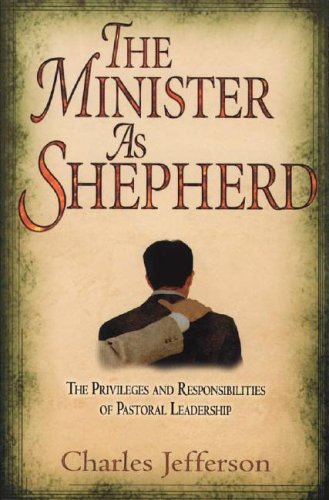
Charles Jefferson pastored the same
place for 40 years
"When God distributes His rewards He does not ask a minister concerning the size of his church, but simply inquires about the spirit with which he has done his work. To every man who shepherds Christ's sheep is the privilege granted of growing into the likeness of the perfect Shepherd. Large parishes spoil some men, but small parishes spoil others. High positions are dangerous, and so also are positions which are humble. A prominent church may make the minister conceited, but an obscure church may do the same thing. A man in a humble church may become very conscious of the sacrifice he is making and talk about it often. Those who are very conscious of their sacrifice, and voluble about it, are not saints after the fashion of the Lord. There are men in high places who are vain, envious and discontented; and there are men in low places in the same unhappy frame of mind. Wretched is the minister who is sour in spirit because his dream of advancement has not been fulfilled and whose life is a long-drawn repining because he is not allowed to become the shepherd of a larger and finer flock."

Soul food
"It is a consolation for all ministers great or small that no matter where one may find himself, or how difficult or obscure his field, the way is open to follow in the footsteps of the Good Shepherd and to win at last the crown of glory. It was a faithful village pastor who wrote these words:


Do the work that's nearest,
Tho' it's dull at whiles,
Helping when we meet them
Lame dogs over stiles;
See in every hedgerow
Marks of angel's feet,
Epics in each pebble
Underneath our feet.


"We have come at last to the crowning reward: everlasting fellowship with Jesus Christ and unending participation in His glory. Whatever the glory of the Chief Shepherd is, we who are undershepherds are, if faithful, to share in it. His prayer was and is, “I desire that where I am there they may be also, that they may behold My glory.” What that glory is we know not now, but we shall know hereafter. Paul calls it a “crown of righteousness.” Peter calls it a “crown of glory.” Jesus calls it a 'joy.'" (pp. 139-140)

And finally, here are Paul's final words in 1 Corinthians 15 that are life-giving to me every time I read them. May they be life-giving to you, too, wherever your ministry assignment may be:

"With all this going for us, my dear, dear friends, stand your ground. And don't hold back. Throw yourselves into the work of the Master, confident that nothing you do for him is a waste of time or effort." (1 Corinthians 15:58, The Message)

Carry on and keep up the good work!


Wednesday, January 25, 2017

Unholy juxtaposition: A meditation on Exodus 32:1-6


The Bible employs all kinds of literary devices to tell its story – narrative, parable, proverb, metaphors, similes, poetry and things called chiasms, and hyperbole (as in, “If your right hand offend thee, cut it off and cast it from thee...”), only to name a few. In Exodus 31-32 the Biblical author uses juxtaposition by placing two events side by side to great affect.

As soon as the Covenant has been ratified and Moses, Aaron and the 70 elders finish their amazing meal in the Lord's presence at which they “see God” ( Exodus 24:10), Moses is invited to go further up the mountain to receive “the tablets of stone” on which will be placed the terms that the people have agreed to. So Moses goes up and Aaron and the rest of the leaders return to the plain below. As chapter 24 closes we're told that Moses enters the thick cloud that lays upon the heights and disappears from view for “forty days and forty nights” (the exact time that Noah and his family were in the ark). From the plains below, however, it looks like he enters the doors of an immense blast furnace.


Within the cloud, time becomes meaningless and over the next seven chapters, Yahweh reveals to Moses the design of the Place wherein he will dwell in the camp, the specifications of the furniture that will be set within the Tent as well as in the adjoining courtyard, the design of the priests' garments, the mixture of the incense that will burn before the Ark that will contain the tablets of the Covenant, even how they will pay for it as well as who will oversee the project and ensure that all is done according to plan. These aren't just blueprints he's receiving; everything will have a purpose in revealing the character and the heart of the God who has redeemed them from a life of slavery in Egypt. The very structure of the Tabernacle will be a sermon in physical form that will speak of God's majesty and power.

Moses will always look like this to me
What glories Moses must have seen while within the Cloud. What mysteries that were impossible to speak of later. And when it was all over, as he leaves the cloud the tablets of Testimony - “inscribed by the finger of God” (31:18) – are placed within his arms. Talk about a mountaintop experience! I can't help but think of Charlton Heston's version of Moses in Cecil B. DeMille's The Ten Commandments emerging from the cloud with that ethereal, far-away look, his face singed by glory. Even if the Biblical author doesn't tell us that his face glowed like it would later, Moses must have been on Cloud Nine. Think of all that had transpired in such a short time. Six months ago – more? less? - he had been an octogenarian shepherd too afraid to heed the summons that Yahweh was commanding him to do. But he returned to Egypt and a mighty kingdom was driven to its knees in a demonstrative way. And here he was now in a personal face-to-face encounter with the Creator of all the earth receiving the revelation that will shape a nation and the world for ages to come.

The tablets are then placed in his hands, the Cloud withdraws and then God speaks:  “Go! Get down there! Your people whom you brought up from the land of Egypt have fallen to pieces. In no time at all they’ve turned away from the way I commanded them...” (32:7, Msg) After a knock-your-literal-socks-off encounter atop the mountain you would expect something like the “Hallelujah Chorus” as a benediction but instead we hear a commanding voice of rebuke and Yahweh sounding like he has already disowned his people. While he's been in Glory, the people – or, at least some of them – have fallen apart. In the interim while Moses has been gone, the nation has fallen away. In fact, an argument could be made that in his absence they have broken all Ten Words that capture the essence of the Covenant.


While the chapter designations in the Bible are a human convention to help us distill the epic the “Story of stories” is, the demarcation between heavenly revelation (Exodus 25-31) and human invention (Exodus 32:1-5) could not be more stark: atop the mountain, there is purpose and design that communicates the holy from the unholy; beneath the people essentially return to a default setting of their life in Egypt and rip-off a form of Egyptian worship. As Thomas Cahill puts it:

Exodus calls it a “molten calf,” though this is by way of denigrating the idol. It was actually a bull, probably rampant and in rut, the aboriginal symbol of potency. This, cries Aharon,

“This is your God, O Israel,
who brought you up from the land of Egypt!”

What follows is an orgy of prostrations, animal slaughter, feasting, drinking, and, as the Book of Exodus puts it discreetly, “reveling” - that is, sexual indulgence in the manner of a pagan liturgy. The bull...was a common image of divinity in Mesopotamia, as it was in Egypt.; and though we cannot be certain that the people thought they were worshiping a bull-god (they may only have meant to worship YHWH as the invisible God who stands on the bull at his
footstool), they have surely made a “carved image” of a visible figure. They have mistaken YHWH for his creation. They have broken the first two Commandments. They have dishonored their forebears – their ancient fathers and mothers – who had so long refrained from idol worship; and, in the course of their reveling, it is most unlikely that they managed to refrain from adultery and sexual covetousness. With a little ingenuity, we might even conclude that they succeeded in breaking all Ten Commandments – but even five out of ten is a pretty good average for so short a time. (The Gift of the Jews, pp. 148-49)

I wonder if this moment in his people's history is what inspired the writer of Proverbs 29 to conclude:

“Where there is no revelation, the people cast off restraint;
but blessed is he who keeps the law.” 29:18 (NIV)

While Aaron and the elders anxiously waited for Moses they caved to the mounting pressure “to do something”, to appease the need of a nation to have something to bow down to and connect with (see Exodus 32:1-6). It's like King Saul who breaks with custom and performs the sacrifice himself before the army goes into battle because Samuel is late and the troops are beginning to slip away and the ones who remain are “quaking with fear” (1 Sam 13:9, NIV). What he does is expedient from a worldly point of view but from a heavenly perspective it reveals that whatever else he is he lacks the kind of faith a godly king is required to yield and it costs him the kingdom.

Admittedly, I don't always know what God is doing nor saying as far as Refuge is concerned. I'm not good at discerning “the times” because in so many ways it feels like trying to focus on the tip of your nose – you get all cross-eyed and blurry while you do it. While having “vision” or discernment as to what God is saying right now to the fellowship we serve is a good and needed thing, the “revelation” referred to in the proverb is that which begins with a capital R, as in the word of the Lord already revealed in Scripture. As in, Jesus is Lord and Master and Savior and calls us to deny ourselves and follow him even if it means to a foreign land or a smaller house or a poorer neighborhood. When the people of God lose sight of his authority over our lives, we begin “to cast off restraint” and reshape our lives and seek to conform them to whatever are the accepted norms of the culture we live in. We see this force at work in our own society in real time now. More and more moral confusion, more and more righteous ambiguity.

Even though Moses has been forewarned, when he sees with his own eyes how “the people were simply running wild” (v. 25) he is galvanized into action. With his nostrils flaring with holy zeal, he deliberately smashes the tablets at the foot of the mountain, melts the golden idol and pulverizes it to powder. Then with a loud shout, he commands the people to make a choice - “whoever is for the Lord, come to me!” (v. 26, NAS) – and then to radically deal with the spirit of rebellion at work in the camp -
This only makes sense if God hates sin
like a doctor hates disease

 “God’s orders, the God of Israel: ‘Strap on your swords and go to work. Crisscross the camp from one end to the other: Kill brother, friend, neighbor.’”

“The Levites carried out Moses’ orders. Three thousand of the people were killed that day.” (v. 27, Msg)

This is one of those passages that offends every person who has ever been perplexed about what appears to be the “angry Old Man” God of the Old Testament and the “loving and meek” Jesus of the New. And yet this same Jesus said some pretty stark things himself:

“If anyone comes to Me, and does not hate his own father and mother and wife and children and brothers and sisters, yes, and even his own life, he cannot be My disciple.” (Luke 14:26, NAS)

“Don't run from suffering; embrace it. Follow me and I'll show you how. Self-help is no help at all. Self-sacrifice is the way, my way, to finding yourself, your true self.” (Matthew 16:25, Msg)

And the aforementioned hyperbolic statement:
“Yes, if your right hand leads you astray cut it off and throw it away; it is better for you to lose one of your members than that your whole body should go to the rubbish-heap.” (Matthew 5:30, PHILLIPS)

The long and short of it is, God - the Lord of Old and New Testaments together - is grieved by the presence of sin in our lives as well as in our Christian community and the way out is not in denial or forbearance but in brutal, decisive action though it look like a Klingon bezerker running through the camp. Honestly, it makes me squeamish but can a holy God ask any less of us than our undivided love and loyalty? When we lose sight of Who He is and how He has commanded us to live, all kinds of trouble can find us and threaten the health of our spiritual life.


Friday, January 13, 2017

God in the banana tree: A reflection on God's extravagance

BANANA

Musa species

Musaceae
Common Names: Banana, Bananier Nain, Canbur, Curro, Plantain

DESCRIPTION
Growth Habit: Bananas are fast-growing herbaceous perennials arising from underground rhizomes. The fleshy stalks or pseudostems formed by upright concentric layers of leaf sheaths constitute the functional trunks. The true stem begins as an underground corm which grows upwards, pushing its way out through the center of the stalk 10-15 months after planting, eventually producing the terminal inflorescence which will later bear the fruit. Each stalk produces one huge flower cluster and then dies. New stalks then grow from the rhizome. Banana plants are extremely decorative, ranking next to palm trees for the tropical feeling they lend to the landscape.
Source: California Rare Fruit Growers


I just returned from a 10-day trip to Belize and while I had a plethora of good experiences that included meeting lots of wonderful people, I learned something there that, forgive me, blows my mind: a banana tree grows but one cluster of bananas and then dies.


Tocho by anybody's standards is a wealthy man
Everybody knows that, right? Well, before taking a stroll with my new Belizean friend, Tocho, through his yard the day after New Year's, I sure didn't. After all, I live in the neck of the woods where apple trees bear apples year after year as sure as raspberry bushes produce raspberries and blueberry bushes blueberries. But a banana tree is literally one and done. As I stood there looking up at his banana trees and ruminating on this little fun fact, I was stunned by the weight of it. All this energy and time and natural resources thrown into making one “hand” of bananas [Note: technically, a cluster of bananas is called a “hand” and the individual bananas referred to as – yes - “fingers”]. And yet, Tocho doesn't seem to worry about. It's life as he knows it in Belize. This tree will bring forth its fruit in due time and then will be cut down. In fact, scattered here and there in his yard that day were the remains of old banana trees like yesterday's trash. At the same time younger banana trees are growing out of the base of the stem of the current tree, ensuring a seemingly endless supply of future hands.

The longer I mused on this the more I marveled at God's largess, his reservoir of incalculable abundance, even after the Fall, that he has put in the earth. I think of the psalmist's words as he meditated on the God's lovingkindness,

“Your love, O LORD, reaches
to the heavens,
your faithfulness to the skies.
Your righteousness is like the
mighty mountains,
your justice like the great deep.
O LORD, you preserve both
man and beast.
How priceless is your
unfailing love!
Both high and low among
men
find a refuge in the shadow
of your wings.
They feast on the abundance
of your house;
you give them drink from
your river of delights.
For with you is the fountain
of life;
in your light we see light.”
Psalm 36:5-9, NIV

In the KJV translation, the word “fatness” is used instead of the NIV's “abundance” to describe the bounty of God's house. Maybe it's because on January 2nd I am not accustomed to being outside in sandals and shorts admiring banana, papaya, coconut and mango trees. Maybe my North American mind was having difficulty processing this truth about the banana tree in particular. But whatever the case even though we live in an age where girth is frowned upon “fatness” was just what I was feeling as looked up at Tocho's banana trees. It was something akin to a epiphany.

My new friend, Tocho

Well, you get the drift...
I think I believe too much in a stingy, Northern God – one who metes out his blessings piece-meal, whose pockets are large but not deep and Who withholds some of his provision because, well, you never know – one bad frost can wipe out your apple crop (like it did a year or so ago). It causes me to be careful, to be cautious, to withhold “just in case.” But the God of the tropics is not that way at all. He's a spendthrift who throws his wealth around as if it's going out of style. Like the Jay Leno Doritos® commercial years' ago where the tag-line was, “Crunch all you want. We'll make more,” God's awesome creation of the banana reminds me that his lovingkindness and goodness and mercy simply never runs out so he invites me again to “Taste and see that the Lord is good” (Psalm 34:8, NIV).

Saturday, December 24, 2016

They saw his glory too: A meditation on Exodus 24:9-11 on Christmas Eve


“Then they climbed the mountain—Moses and Aaron, Nadab and Abihu, and seventy of the elders of Israel—and saw the God of Israel. He was standing on a pavement of something like sapphires—pure, clear sky-blue. He didn’t hurt these pillar-leaders of the Israelites: They saw God; and they ate and drank.” Exodus 24:9-11, The Message

“In one of the most amazing texts in the Bible, these men saw God.” Walter Kaiser, Jr

They trembled too...but it was just acting
In the Bible, to “see” God is no small thing. In fact, the few that had such a numinous experience with glory wrote afterward about it as if they had a brush with death but lived to tell of it: Gideon, Manoah, Isaiah, Ezekiel. All of them describe being whelmed by a wave of terror. Think Dorothy, the Scarecrow, the Tinman and the Cowardly Lion (and Toto, too) approaching dreadfully into the throne room of the “great and terrible Oz” except in this case it's not fiction and there is no friendly little man over in the corner behind a curtain working the levers. On the mountain when Jesus is transfigured before a few of his closest disciples, just the sound of God's voice is enough to cause them to hug the ground as if being caught in a barrage of artillery. All that to say it is no light thing to stumble across glory.


After a little more than three months of sojourning from Egypt, the people of Israel had finally arrived at the mountain, “the mountain of God” as it is referred to a couple of times in Exodus. Author Bruce Feiler notes in his own tracking of his ancient ancestors' footsteps,

The Israelites, who for centuries were enslaved in the flatlands of Egypt, had not encountered mountains as high as the Sinai for at least six hundred years. The Bible says they “trembled,” and seeing the red granite mountains in the southern Sinai, one of the leading possibilities for the site, one can understand why.


Rising 7,455 feet above the plain Jebel Musa (the traditional site of Mount Sinai) is not a particularly tall mountain as those things go but “its barren face is dramatic...As the American visitor John Lloyd Stephens wrote in 1835, 'Among all the stupendous works of Nature, not a place can be selected more fitting for the exhibition of Almighty power.'” (Walking the Bible: A Photographic Journey). Add to it thunder, lightning, thick billowing smoke, fire and the very mountain – mountain! - “trembling violently” (Exodus 19:18-19) no wonder the people pleaded with Moses to go on their behalf. They were certain their lives hung in the balance before such Power.

His invitation to Scrooge is an echo of the one offered to them
Over the next few weeks, Moses will make that trip up and down that mountain several times during which time he will receive the foundational Ten Commandments (20) and the complimentary Book of the Covenant (21-24) as well as the design plan of what was to be his dwelling place among them in their travels through the wilderness (25-31). After the people heard the terms of the Covenant and agreed wholeheartedly to them, Moses records that he then solemnized the moment with sacrifice, sprinkling the blood upon the them (24:8). And then God extends his remarkable invitation to Moses and Aaron, Nadab and Abihu and the seventy elders to join him upon the mountain for a meal. I think of the Ghost of Christmas Present in A Christmas Carol who beckons Scrooge in his bedroom to “come in here and know me better, man” as this kind of moment. But instead of a jocular giant cajoling a frightened Scrooge to make his acquaintance it is the King of all the earth whose very presence has made the mountain shake all the way down to its roots. “Scared” is so inadequate a word to describe their frame of mind at that moment but do they dare decline an invitation from the Deity?


All that is preserved for posterity from that awe-ful moment, however, is a sparse two sentences that state the main facts: that they went up and saw God; that the most they could or bothered to describe was the color of the pavement he stood upon, a blue like a clear, blue sky; and that they sat down and ate and drank in his presence (24:9-11). No one bothered to record what was on the menu. Not one thing that was said – if anything was said at all – was written down later. Clearly the most astonishing thing about this episode as far as they were concerned is that they did not die.

Something like this
When our kids were little, we used to have a tank with seven gold fish in the boys' room. As God's creatures go, the gold fish is a pretty simple creation: they swim, they eat and they poop. If I remember right, we didn't have a filter or an air pump. It was just a tank full of tap water with some pretty rocks and underwater decorations. After awhile, the water got murkier and murkier and the onus to clean the tank and change the water became increasingly greater with each passing day. Soon, the water was so green all you could see was a fin or a tail or a faint glitter of gold now and then. The time had come and an intervention was at hand. Linda and I didn't draw straws or rock-scizzor-paper-it; I was simply the first to cave.

I set to work. First with a little net I gently gathered up the small school of fish in a large plastic bag full of tepid water and set them aside. Then I got cleaning: I scrubbed the sides of several weeks' worth of algae, I rinsed the little rocks of gravel and made sure every sign of filth and muck had been washed away. Then I filled the tank afresh with clean, lukewarm water and gently reintroduced them to their former habitat. And instantly six of them bellied up and died. Just like that.


Maybe after weeks of living in dirty, low-oxygenated water to suddenly breathe rarefied air was too much for their nervous system? Or (as someone who heard me tell this story recently suggested) it was the Windex I used to clean the glass? Whatever the reason, instantly six were translated to gold fish heaven. And the seventh? He lived and seemed happily content to be back in his old surroundings (later that spring we brought him out to some friends of ours' goldfish pond where “Freddie” - as they came to call him – happily lived on for several more years).

Ever since then that image of six croaked fish floating on the surface of the water seems to me to be an appropriate metaphor of what would become of any of us were we to be suddenly translated into the Presence of God. Sinful from the get-go, rebels the whole lot of us, one moment of being exposed to heaven's gamma rays and we're dead men. Recall, several chapters later in Exodus when Moses boldly asks Yahweh to see God's glory (33:18), God curtly replies that he will be allowed to see his back but not his face “for no one can see me and live” (v. 20). Which makes Exodus 24:9-11 all the more remarkable. Except for Moses, these guys are not overly spiritual – Aaron will be complicit in the making of the Golden Calf a month or so later, Nadab and Abihu will be dead by holy fire early on in their travels for being reckless (and probably drunk) carrying out their priestly duties and all of these elders (unless Joshua and Caleb are included among them) will die in the wilderness on account of rebellion. And yet, reports Moses, they sat in the Presence of God and saw Him.

Of this moment, theologian John Mackay says that these “representatives of Israel are given a foretaste of what heaven is like when they are permitted this audience with the King” (Exodus: A Mentor Commentary). Nearly a millennium later at the occasion of another sacred meal, Philip asks his rabbi and teacher, Jesus of Nazareth, “Lord, show us the Father and that will be enough for us.” To wit Jesus will astoundingly reply, “Anyone who has seen me has seen the Father” (John 14:8,9). Many years later, John, who was at that dinner, will write those words that will be read at most Christmas Eve services tonight,

“The Word became flesh and made his dwelling among us. We have seen his glory, the glory of the One and Only, who came from the Father, full of grace and truth...No one has ever seen God, but God the One and Only...has made him known” (John 1:14, 18)

Um, sorta like this
A thousand or more years before seventy or more guys sat down to a meal and lived to tell of it. Perhaps that they could has to do with the fact that prior to that moment they had been sprinkled with blood and their sins had been covered. Without that, they would have been melted just like those two Nazis were in Raiders of the Lost Ark when they dared to open the Ark of the Covenant. Poet Annie Dillard once reflected how pedestrian we can become in worship, reciting the liturgy by rote without pausing to think about what we are intoning:

“On the whole, I do not find Christians, outside of the catacombs, sufficiently sensible of conditions. Does anyone have the foggiest idea what sort of power we blithely invoke? Or, as I suspect, does no one believe a word of it? The churches are children playing on the floor with their chemistry sets, mixing up a batch of TNT to kill a Sunday morning. It is madness to wear ladies’ straw hats and velvet hats to church; we should all be wearing crash helmets. Ushers should issue life preservers and signal flares; they should lash us to our pews. For the sleeping god (sic) may wake someday and take offense, or the waking god (sic) may draw us out to where we can never return.’” (Teaching a Stone to Talk)

And yet this same God who shook the mountain and caused it to tremble and quake before Him is the one who has come close to us in Jesus allowing us to enter his presence, sit down and enjoy his friendship.


Wednesday, November 16, 2016

The tragic case of William Freeman: A lesson in courage

“The witnesses for the State...have presented themselves to you gentlemen, to this court in the cynical confidence that their testimony would not be doubted, confident that you gentlemen would go along with them on the assumption... the evil assumption that all Negroes lie, all Negroes are basically immoral beings, all Negro men are not to be trusted around our women. An assumption that one associates with minds of their caliber, and which is, in itself, gentlemen, a lie, which I do not need to point out to you. And so, a quiet, humble, respectable Negro, who has had the unmitigated TEMERITY to feel sorry for a white woman, has had to put his word against TWO white people's! The defendant is not guilty - but somebody in this courtroom is. Now, gentlemen, in this country, our courts are the great levelers. In our courts, all men are created equal. I'm no idealist to believe firmly in the integrity of our courts and of our jury system - that's no ideal to me. That is a living, working reality! Now I am confident that you gentlemen will review, without passion, the evidence that you have heard, come to a decision and restore this man to his family. In the name of GOD, do your duty. In the name of God, believe... Tom Robinson.” Atticus Finch in To Kill A Mockingbird

While it would be difficult to pin me down to a favorite film, To Kill A Mockingbird is certainly in my Top 5 (next to, say, The Shawshank Redemption and The Best Years of Our Lives). It's the movie based on Harper Lee's 1960 Pulitzer Prize winning novel of the same name. Atticus Finch is the heroic lawyer who is willing to defend Tom Robinson, a black man who has been falsely accused of raping a white woman in Jim Crow Alabama. He does so at great risk to his local reputation as well as his children's lives but defends the man anyway because, well, it's the right thing to do. Predictably, Tom is found guilty and before Atticus can file an appeal, Robinson is shot in his attempt to escape. It's a story that 50-some years after the passage of the Civil Rights Act of 1964 still speaks powerfully to matters of social justice and moral courage.

A great read
I've recently begun to read Team of Rivals: The Political Genius of Abraham Lincoln by Doris Kearns Goodwin and just this morning read a portion of a chapter which focuses on the four major contenders (Lincoln among them) for the Republican Party's nominee for President of the United States in the 1860 election. Among the four was William H. Seward, an ambitious and affable politician from New York who got caught up in a similar moral storm as the fictional Atticus fifteen years before.


In 1846, Seward at forty-five years of age had already served New York as governor for two succeeding terms and had returned to private practice. In his home town of Auburn, a black man by the name of William Freeman had gone on a rampage and brutally killed a wealthy white man, his pregnant wife, their young daughter and his mother-in-law. The sheriff was lucky to get Freeman to the jail before a mob could lynch him. No one would take up his case and the locals threatened any lawyer with physical harm if he would dare to try.

As Goodwin tells the story: "When the court asked, 'Will anyone defend this man?' a 'death-like stillness pervaded the crowded room,' until Seward rose, his voice strong with emotion, and said, 'May it please the court, I shall remain counsel for the prisoner until his death!'"

He immediately was censured and criticized by friend and foe alike. Why would he be so foolhardy to jeopardize his future career in politics by taking on a case he was sure to lose? But he took the case all the same. His investigation revealed that Freeman had spent five years in jail for a crime he did not commit and that while incarcerated he had been flogged repeatedly which had left him deaf in one ear and mentally unstable. He had confessed to the crime immediately upon his arrest but in Seward's estimation he was criminally insane. In his closing argument before the jury he pleaded "...he is still your brother, and mine, in form and color accepted and approved by his Father, and yours, and mine, and bears equally with us the proudest inheritance of our race—the image of our Maker. Hold him then to be a Man." “I am not the prisoner's lawyer,” he reasoned, “..I am then lawyer for society, for mankind, shocked beyond the power of expression, at the scene I have witnessed here of trying a maniac as a malefactor.” He begged the jury not to seek the death sentence. Rather, he should be committed to an asylum for the rest of his life adding: "there is not a white man or white woman who would not have been dismissed long since from the perils of such a prosecution.”

He expected to lose his case, despite persuaded of the justice of his cause - and did. But unlike Atticus in Monroeville, later won on appeal. Sadly, before Freeman could be moved to an asylum he died in jail.


At the heart of the storm, with public opinion against him and risking his future career, his wife, Nancy, stood by her man and wrote their son that “there are few men in America who would have sacrificed so much for the cause of humanity – he has his reward in a quiet conscience and a peaceful mind.” I'm sure Harper Lee didn't have Seward in mind when she wrote her novel (actually, she was thinking of her father, Amasa “A.C.” Lee, an attorney and Alabama state legislator, whose 1923 defense of a black client is the partial backstory of the novel's trial) but in reading Nancy Seward's sentiments about her husband I can almost hear a faint echo of Aunt Maudie telling Jem, “...some men in this world are born to do our unpleasant jobs for us...your father is one of them.”


I'm inspired by Seward's display of moral courage, to do the right thing because it's right not because it's expedient or, God forbid, will look good on a resume. In Goodwin's estimation, his choosing to take this case as well as several other stands he took in his early political career on the grounds of social justice eventually cost him his party's nomination for president. Is that a small price to pay for a clear conscience? He seems to have thought so.

At the close of the Freeman trial, as this distinguished man labored to persuade men whose prejudice made them tone deaf to his argument he spoke, if you will, a prophetic word: “In due time, gentlemen of the jury, when I shall have paid the debt of nature, my remains will rest here in your midst, with those of my kindred and neighbors. It is very possible they may be unhonored, neglected, spurned! But, perhaps years hence, when the passion and excitement which now agitate this community shall have passed away, some wandering stranger, some lone exile, some Indian, some negro, may erect over them a humble stone, and thereon this epitaph, 'He was Faithful!'” More than a century afterward, Goodwin observes, visitors to Seward's grave at the Fort Hill Cemetery in Auburn would find those very words engraved on his tombstone.


As much as I like Gregory Peck and all things Mockingbird, Seward's story is true. He was a man who lived in a time where both north and south, people were ambivalent about the intrinsic worth of any person not of European descent. For his part, long before the Freeman trial he was already persuaded that slavery was an evil that needed to be eradicated from the country. While he wasn't alone in his sentiments clearly many of his contemporaries were not willing to risk so much for the life of a crazed man who had brutally killed a local family. In this he displayed remarkable fortitude and courage and is a reminder to me that there are certain hills worth risking failure for – or worse.