My name is Jeff and I'm a pastor of a small, local, Christian fellowship

It's a wonderful thing to love your work; to know that when you do it you are doing something that you were born to do. I am so fortunate to be both. I don't say I am the best at what I do. God knows that are so many others who do it better. But I do feel fairly lucky to be called by such a good God to do work I can only do with his help, to be loved by a beautiful woman, and to have a workshop where I can work my craft. These musings of mine are part of that work.
Powered By Blogger

Wednesday, November 14, 2012

After you've read it

So was I speaking and weeping in the most bitter contrition of my heart, when, lo! I heard from a neighbouring house a voice, as of boy or girl, I know not, chanting, and oft repeating. ‘Take up and read; Take up and read.’ [’Tolle, lege! Tolle, lege!’] Instantly, my countenance altered, I began to think most intently whether children were wont in any kind of play to sing such words: nor could I remember ever to have heard the like. So checking the torrent of my tears, I arose; interpreting it to be no other than a command from God to open the book, and read the first chapter I should find… - St. Augustine (Aurelius Augustine, The Confessions of St. Augustine, translated by Edward Pusey. Vol. VII, Part 1. The Harvard Classics. New York: P.F. Collier & Son, 1909–14; Bartleby.com, 2001. www.bartleby.com/7/1/, Book Eight, Chapter 12, Paragraphs 27-28.)
...
“What is this obsession people have with books? They put them in their houses like they're trophies. What do you need it for after you read it?” - Jerry Seinfeld in “The Ex-Girlfriend” (Season 2)

No Martin would think to be without a copy
As anybody who knows me can testify, I'm a bit obsessive about books. Ever since I could read, I have been collecting them (although admittedly most of the books I cut my teeth on, as it were, remain in my mother's possession.) My personal collection has grown and been culled many times over since high school although some volumes have remained insoluble like granite over the decades of my life: The Hobbit, The Lord of the Rings, The Silmarillion and all things Tolkien; The Chronicles of Narnia and The Space Trilogy both by Lewis. Since becoming a pastor my collection actually has grown to four different locations – the office and the nook under the staircase at home and my office and, at the present moment, a makeshift storage room in the basement at our worship facility. They are divided into my personal favorites (office at home), my “second favorites” as well as children's books I read at Roselawn Elementary (the nook under the staircase), all things I need pastorally from sermon prep to spiritual renewal (my office) and “also good to have” books that presently are in the storage room because I have no more shelves to house them on (I also have about 30 volumes presently stacked on the floor of my office that are also homeless).
Near the Bible on our bookshelf
I'm not what you would call obsessively neat but every few months the accumulation of the various detritus of my craft reaches the breaking point and then I become focused on culling the herd, as it were. “I need to downsize my library” I tell myself as I stare at tomes I have not touched since placing them on their current shelf years ago when a carpenter who attended our fellowship at that time built them. But as I go to reach for them I find myself suddenly reluctant to part company with them. While admittedly some I have never read – and based on my current interests am not likely ever to read them – still the thought that I might need their counsel at some undisclosed later time freezes me in the act. And suddenly the process becomes a bit overwhelming and I decide to hold off for another day.

Yesterday, I thought of my son, Ed, who aspires to be a pastor himself one day. As a freshman in college, that time is several years in the future ahead of him but speaking as someone who has logged 21 years of pastoral ministry to date as I thought of him I asked myself, “What books would I recommend to Ed starting out in his ministry? What are some of the “must have” resources it would be wise to have only an arm length's away from him? Here's a partial list. It doesn't claim to be definitive. Let's face it, beauty is in the eye of the beholder and that includes the books one reads. (Actually, this may be personal therapy getting me ripe for a cathartic swipe of my shelves):

“Dear Ed:

Now you are a pastor. It's not that I'm surprised that you ended up there. I think we've known for quite some time that God has gifted you with ability to do what you have set out to do. But still, that foreknowledge doesn't halve the pride your mom and I have in you saying yes to the Lord's call on your life.

If you haven't already, you're gonna get a lot of stuff in the mail of resources that every pastor “has” to have. Based on my experience, they are not as many as you will come across or will be asked to purchase over the course of your career. Solomon was right: “Of making many books there is no end,” (Ecclesiastes 12:12, NIV) and all these years later he's still right. As someone who probably has spent thousands of dollars on collecting books (although since websites like Alibris.com and Amazon.com came to be, I get them a whole lot cheaper now), I'd like to give you my two cents worth of what you really need. If you're like me, you probably will have to find some of this out on your own but in an attempt to save you some cash here's my short list of books that have helped me grow in my craft:
  1. The Bible
    Except I have my name embossed on it
    Well, duh, right? You need a good Bible (lately I've enjoyed my NASB/The Message Parallel Bible – go figure) to read devotionally, preach, teach, the whole nine yards. With a tool like BibleGateway.com, you really don't need a copy of each kind of translation. Just scroll down to the version you're interested in and in most cases, voilǎ, your favorite verse in the translation of your preference appears.


  2. Good Bible software for your computer
    For my 10th anniversary of serving as pastor at Refuge, your grandparents got me the NIV Study Bible software. Not only can you use the concordance in various versions, it has a running commentary with helpful notes. I use this nearly EVERY DAY.
When it comes to reference materials, really, you just need to have Google and access to high speed internet (if you find yourself at Grandma and Grandpa Martin's home, you better hope you have wi/fi because they're still on dial-up; how do they do it?) But a few books on my shelf that I like having there are:


  1. The IVP Atlas of Bible History
    I like Ray Vander Laan
    It has lots of cool pictures and maps but nothing you couldn't find on-line. In fact, for good insight into many of the events of Scripture I have found Ray Vander Laan's website, Follow the Rabbi (www.followtherabbi.com) very helpful.


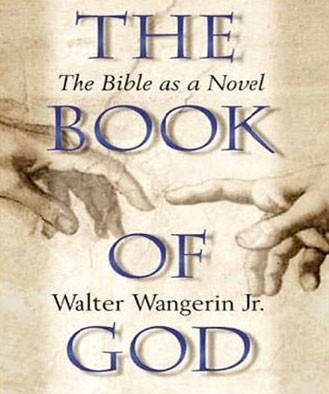
  2. The Book of God, Jesus: A Novel and Paul: A Novel all by Walter Wangerin, Jr
    The man is a story-teller perhaps better for the soul than Keillor. I like Garrison but some of his cynicism leaks out into his stories at times. But as a pastor Wangerin ministers to me personally. He takes you into a moment in Scripture and fills it out so that you can hear sounds and smell the aroma of the place you find yourself in. You met him when you were a boy and frankly, he was impressed with you.
    A couple other of his works that I love are The Book of the Dun Cow, Ragman and Other Cries of Faith, and Miz Lil & the Chronicles of Grace, a somewhat autobiographical account of his first pastorate.


  3. Except mine are far more worn
    The Singer, The Song and The Finale by Calvin Miller
    I love the tale of the Gospels, Acts and Revelation that Miller spins in this three volumes of prose and poetry. In fact, every Christmas Eve at our candlelight service I read Chapter 7 from The Singer which starts out
    “In the beginning was
    the song of love
    Alone in empty nothingness
    and space
    It sang itself through
    vaulted halls above
    Reached gently out to
    touch the Father's face.”
    The fact that the copies that I own are the original editions illustrated by Chicago artist, Joe DeValasco makes them even more special (all the later editions are illustrated by artists not of his talent in my opinion).
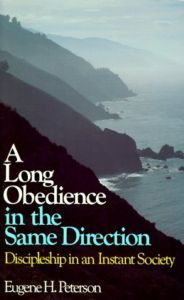
  4. A Long Obedience in the Same Direction and Run with the Horses both by Eugene H. Peterson.
    Eugene is the man. The first time I read Long Obedience I was a freshman at Bible college. His insights on life taken from his meditations on the Psalms of Ascents spoke deeply to me. I think I've come back to that book many a time. And Horses solidified Jeremiah as one of my personal heroes in Scripture. Any guy who can stay on message for 23 years despite congregational deafness and resistance deserves a salute. 
     
    I'm grateful to Peterson's perspective (in fact, somewhere I have a postcard I received from him after I had sent him a letter of thanks for how he mentored me vicariously) but also for introducing me to many other authors I would most likely never have heard of chief among them being Wendell Berry. Wendell Berry is a farmer in Kentucky but also a philosopher and a social critic. He writes a lot about a world that has disappeared – rural America where relationships were key. I think it was Peterson's reading of Berry that help me to understand what a “parish” really is. 
     
  5. Love, Acceptance and Forgiveness by Jerry Cook
    This little book changed my view on pastoral ministry drastically. It's what ever person needs and deserves. I think of all the books I've quoted over the years, I wouldn't be surprised I've quoted from this one more than all the others. Reading his book (and hearing him in person when he came a couple of times to Duluth Gospel Tab) literally changed my life. 


  6. Biographies and Histories.
    Granted, you and I are history buffs but all of church history is really the Story of God being worked out in individual lives. In recent years I have found that I have a growing interest in biographies of those who have walked ahead of me either as pastors or ministry leaders in various locations. I just got done with Elisabeth Elliot's fine biography on Amy Carmichael, A Chance to Die, and while it doesn't make me want to sell all I have and move to far off India she does force me to ask myself why not? 


  7. Lots of books on healing, deliverance, the Holy Spirit and more
    He has some very good things to say
    I remember my pastor, Warren Heckman, saying something that in time I have come to personally believe as well. “Everyone has a system of 'doing' it – how to pray for healing, how to deliver someone from demonic spirits, how to be filled with the Holy Spirit and so forth. One guy believes you have to do it one way. Another in a different manner. No one, it seems has a corner on the market.” He's right. Because now that I've collected volumes on such things and read them, I am persuaded that while God still is in the healing business it is, ultimately, a mystery why some are “cured” and some are not. I prefer Wimber's approach who once quipped, “When we didn't pray for the sick to recover, no one got better. Once we started praying for the sick, some got better.” Exactly. Having a wide view of things keeps you open to how God may want to work in a particular situation. 
     
  8. Ditto when it comes to prayer. Lots of people write about prayer and will continue to write on the subject. Everyone has their favorites. Actually, of all the ones I've read on the matter The Beauty of Spiritual Language (Jack Hayford) and When the Spirit Comes with Power (John White) probably have spoken the most to me but more than likely because of the place I was when they spoke to me.



I have found that over twenty years of ministry my books that tend to be more philosophical and theological have moved up the bookshelf while the books that speak to everyday life have moved down. But that's because I'm a pastor. People don't care about the historical background of a certain text. They want to know how it walks. Quoting them a guy with a lot of letters after his name doesn't do them a whole lot of good I have found. Keep the main things the main things and maybe pass on The Complete Works of Francis Schaeffer. He wrote lots of great stuff but what I've read hasn't really helped me in my craft.

As I think about this list, that leaves a lot of books that I probably should move out of my office and donate to Goodwill. But who would buy them there? The going rate of used books is fairly dismal. But I can't stand the thought of throwing them out or – heaven forbid – burning them. So for the time being they will continue to take up space on my shelves and my floor. I guess Jerry Seinfeld was right about most books you'll read – you'll find you won't reference it or need it ever again. What's a bibliphile to do?

Now here's the funny thing: I've already placed dibs on some of the books in your grandparents' bookshelves when they decide to clean house. I'm particularly interested in some of the classics, especially The Journals of Lewis and Clark that I read in high school. Where will I put them? Who knows? Maybe when your sisters move out I can size up their room for an upstairs library but I'm pretty sure your mother is going to draw the line and not allow it. So, when all is said and done, I guess I haven't been much help. Other than, as e-books become more and more popular you'll have less boxes to pack when you move on to your next call.

Love always, Dad.”

The copy my folks' have is way cooler

Admittedly, there are a lot of books that I haven't mentioned that I'm not ready to part with. But one thing I'm not going to do is what some retiring pastor did to me. He showed up at Refuge one day and bequeathed to me boxes of books he no longer used. I know he meant well but I'm pretty sure coming to me saved him a trip to Goodwill in Rice Lake.

Monday, November 12, 2012

Choosing earth over heaven

“One day one of the local officials asked him, 'Good Teacher, what must I do to deserve eternal life?'
Jesus said, 'Why are you calling me good? No one is good—only God. You know the commandments, don’t you? No illicit sex, no killing, no stealing, no lying, honor your father and mother.'
He said, 'I’ve kept them all for as long as I can remember.'
When Jesus heard that, he said, 'Then there’s only one thing left to do: Sell everything you own and give it away to the poor. You will have riches in heaven. Then come, follow me.'
This was the last thing the official expected to hear. He was very rich and became terribly sad. He was holding on tight to a lot of things and not about to let them go.” Luke 18:18-25, The Message
...
“Few biblical figures are as tragic as this young rich man as he walks away from Jesus' invitation. But other factors, such as achievement, pride, and family, can also reside in the place that should be reserved for God. Anything that excessively anchors us to the earth rather than freeing us as commissioned representatives from God indicates a breakdown in the discipleship process. What is really frightening is how easy it is for all of us to choose earth over heaven.” Darrell Bock, Luke: The NIV Application Commentary, p. 470

The man's got a lot of dough
Every time I read his story, I think of this young man (well, only Matthew tells us that he was young – see Matthew 19:16-30) and ask, “Who is he?” Does he represent the “rich and famous”? The Donald Trumps of that world? A guy whose yearly income towers over the GNP of some small country in Africa? Or, is he someone closer to home? In Luke's account, all that we are told is that he was “a man of great wealth” (v. 23). But that's a relative statement. Compared to what? Donald Trump certainly is a man of “great wealth” but in comparison to say, Bill Gates, what he has is merely pocket change. I would guess that my annual income would put me slightly above the poverty line for this neck of the woods but in comparison to many of my friends in Africa, I live high on the hog. So depending on your point of view you are either swimming in it or just scraping by (although even at a net worth of 3.1 billion dollars, Donald Trump is enjoying himself regally in his luxurious wealth pool.) Matthew's and Mark's account of the same incident are almost identical – in every case, the young man goes away downhearted because the price of what Jesus has quoted for the kingdom of heaven is, from his perspective, way too steep.

I live in a modest home, drive used (and, thankfully, paid for) vehicles, and wear Wal-Mart variety clothes. The most expensive shoes I own are the ones I currently wear for running. My closet is chock full of clothing. I have footwear for all kinds of seasons (a must for living in northern Wisconsin.) By Barron County standards people would say I do “okay” for the kind of profession I am in. And I would agree. I'm not living in the tall cotton but I'm not on skid row either. Still, this encounter bothers me because I think it's meant to. It forces me to ask myself what I am holding on to and how I would respond if the Lord asked me to do the same. To me, the question is not “could I do it?” but “would I?” Would I turn my back on my comfortable lifestyle here in the Midwest in response to the Lord's invitation to move into a far more impoverished neighborhood for the sake of the gospel? I really can't say because the question, after all, is at this moment hypothetical.

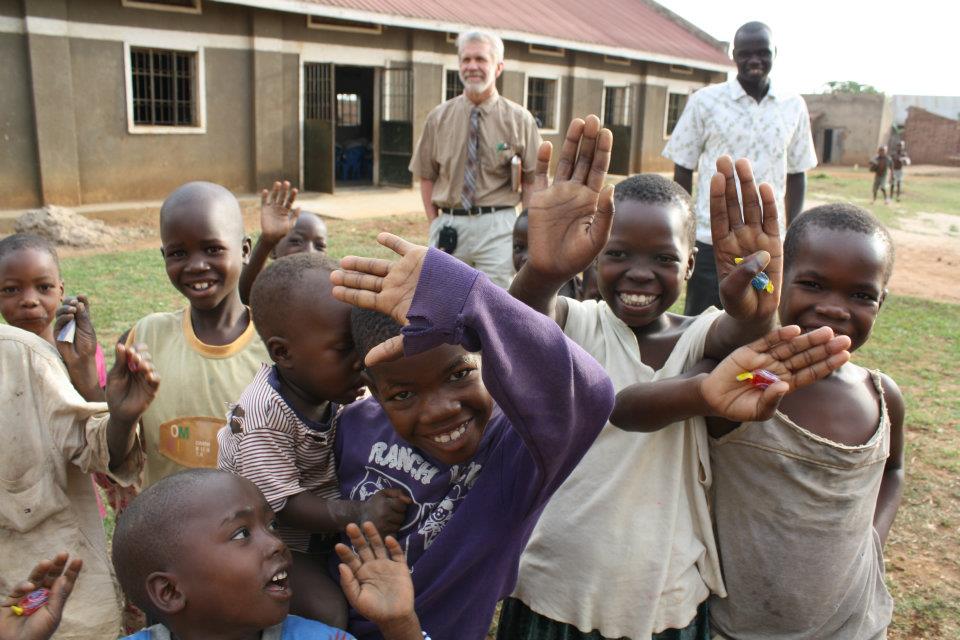
This fall, for our family reading time before school each day, we have been reading Kisses from Katie, the autobiographical account of Katie Davis' move from a wealthy suburb of Nashville to a poor neighborhood in Uganda. A young woman from money, she turned her back on it all for the sake of God's call on her life to serve and love children in this impoverished country in Africa. She was 18 when she arrived and now at 23 she is still there and the foster mother of 13 Ugandan children. Her story is fairly remarkable made more so to me by my opportunity to meet her this past March when I was in Uganda. The other night at the dinner table, our 17-year old daughter asked me, “Do you ever find yourself getting mad at yourself for all the things you own?” Lately, Emma has been looking at her bursting closet and the assorted jewelry that has accumulated on her desk and finding herself getting angry. “Why should I have so much while so many others have little or nothing at all?” It is a contradiction that any person who has ever traveled outside the U.S. and frequented economically deprived areas faces. Why was I born in suburban America insulated from the pain and suffering that much of the world experiences on a daily basis? And why does a kid named Ronald have to drop out of secondary (high) school because his family cannot afford his tuition? It's all very disconcerting.

I told Emma that I don't get mad at myself. I find that having been to places like Uganda, the Philippines, and Mexico that I am much more grateful for the simple conveniences of indoor plumbing and clean drinking water that I have access to whenever I have the need. But I also tell her the accumulating affect of having been to those places has been to force me to rethink what are my lifestyle priorities here. Do I really need to purchase another book for my library? While a certain piece of equipment for my hunting forays would be nice, is it necessary? Admittedly, these are very small steps but meeting people like Katie and Ronald and many others living in comparatively spartan conditions has motivated me to hesitate before I just buy things because I can.

Says Katie:
She really is remarkable
“...I quit my life...and for good this time. I quit college; I quit cute designer clothes and my little yellow convertible; I quit my boyfriend. I no longer have all the things the world says are important. I do not have a retirement fund; I do not even have electricity some days. But I have everything I know is important. I have a joy and a peace that are unimaginable and can come only from a place better than this earth. I cannot fathom being happier. Jesus wrecked my life, shattered it to pieces, and put it back together more beautifully. (from the Introduction)

Honestly, I'm not there yet. I still dream of a patch of woods in Douglas County to retire to. I find myself thinking about a deck out back and a porch out front – and some landscaping to boot. Were these projects somehow to be completed, I know they would be replaced with other yet unconceived ideas. It is the way things are. I pray to hold such dreams loosely and not sell out to them so that when an opportunity arises – and it will arise – to invest in kingdom matters in Uganda or elsewhere I will be able to do something instead of being so strapped that I can do nothing. Jesus reminds me in this story that the unnamed “poor” are real people some of whom I've already met. 
 

Saturday, November 10, 2012

On the Art of Making Friends in Africa

"The Wall" at Refuge
At the fellowship I serve as pastor, the leadership is committed to fulfilling what we believe our calling to be relationally connected to the Church of Jesus Christ around the world in our shared purpose of making disciples. Given that our town is predominantly white, I find it an oxymoron that our last name is “International.” But at the present time, we know people who are serving in the Philippines, in New Zealand, in China, in Liberia, Nigeria, Egypt, Uganda, Kenya, Guatemala, among Somali refugees in our own county, and among First Nations people living on the Lac Coutre Oreilles Reservation about an hour north of here. As I related a few posts back (Culture Shock and Awe), everyone I have just referenced has shared on more than one occasion at the weekly worship gathering of our fellowship and while they do not all receive regular financial support from us, they are prayed for with regularity. What's more, in recent years small teams from here have gone to a few of these individuals to visit and encourage them in their work there.

Last year, the small group in charge of planning our annual missions event felt led to focus on Africa.
This was curious to me for at the time we only knew a handful of individuals serving there and they were little more than acquaintances. But we set our course and in time, a connection with a pastor in Uganda who had shared at Refuge a few years before was renewed quite serendipitously and that spring a man from Africa was standing in our sanctuary inviting us, “to come to Africa and serve the Lord.” That unusual experience was repeated twice again that spring – once by a man from Nigeria and once by a man from Liberia ("GO TO AFRICA!"). Clearly, the Lord was calling us to go there.

Eventually, two small teams from here went “over there” earlier this year. One team, led by one of our elders, went to Kenya because of a prior relationship with the sister of a pastor serving there. The team that I was a part of, led by another of our elders, went to Uganda a few weeks later. We went in search of friends. And we found and met many. In fact, my “friend” stat on Facebook went up dramatically because of that field trip to the Pearl of Africa.

Dolores (LCO) and Linda have become friends
But developing friends via social media alone involves a learning curve of sorts. We didn't go over there with bags of money or with the overt intention to start throwing our financial weight around. But we were immediately aware that many of our new African acquaintances misread our intentions. Thinking we were there to find some worthy project to get behind, we became the belles at the ball being feted by one consort or another. Now most didn't lay it on too thick but in one instance where we were escorted all around a certain rural district from one project to another we became very uncomfortable when it was clear the group leader wanted to elicit a financial commitment from us. It's not a healthy way to build a friendship.

Because I am a pastor, I was given the floor at nearly every stop to preach. I'm not uncomfortable in speaking off the cuff. My ministry at the Justice Center has taught me to do so with ease. But what made it awkward at times is when we would be gently pressed to make certain promises of financial commitment and this we could not – nor would not – do.

I don't want to give the wrong impression. It wasn't all of them. And even those who button-holed us are clearly doing good work with very limited means. But they obviously viewed us as cash cows simply because we are Americans and milking time was here.

Pastor John
Since returning from Uganda, I have remained in contact via Facebook chat with several of my new friends. And in fact, both of the pastors of the fellowships we shared at while we were there just last month shared at Refuge. But here's where it gets awkward. Some of my new friends have not even tried to be coy about the matter and asked if we would help them financially. In the last few months, I've been asked to help pay for tuition, for medicine, and to help alleviate a financial downturn in a person's life. None know or guess that at times I am chatting with a few of them at the same time and each is asking that I help with their particular need. I replied to one Ugandan teen's friend request and every day I was bombarded for a plea to send money so she could go to school. It got to be where I had to ignore her chats until she gave up on me. Last month, I asked a friend of mine who has been serving in East Africa for fifteen years how best to respond to these requests for aid. He shared with me that in Africa where there is a much more sense of community people share with one another more readily than they do in the States. It makes me think how different our worlds are: one of my friends on this side of the world is a very wealthy individual but I would never even think to ask him for money for fear how it would affect our friendship; but what if part of what we would call a lack of social grace is really an expression of recognition that we are, after all, friends and friends share with friends?

Pastor Moses
The two Ugandan pastors that shared at Refuge each spoke of looking for “partners” for the different projects they have begun whose focus is to help alleviate the plight of orphans – and in Uganda there are so many orphans! But when I think of the word “partner” I think of two people who are in relationship and are working together toward a common goal. What I think they mean is they are looking for “investors”, people who will make a one-time or an ongoing investment to help those who are fatherless. It's not that what they are doing is not support-worthy. It's not that I think they will misappropriate the funds for selfish purposes. It's the fact that I do not want to begin a kingdom venture motivated by guilt alone. For several years our family, for a minimal amount, has supported an orphan in Guatemala. For our commitment for doing so, we received a grainy black-and-white photograph with the kid's name on it and nothing since. I write that check without so much of a thought and I trust it is going to what the ministry says it uses my funds for. But honestly, my concern for him has not grown since Day 1. Sitting at my office desk, I can't even think of his name. Somehow this does not seem right to me.

I guess I've taken the stance of Peter and John on their way to the Temple to pray. A lame beggar reaches out to them as was his daily custom. Maybe they saw that guy hundreds of times since setting up shop in Jerusalem. But that day, Peter looked at him and said,

“I don’t have a nickel to my name, but what I do have, I give you: In the name of Jesus Christ of Nazareth, walk!” He grabbed him by the right hand and pulled him up. In an instant his feet and ankles became firm. He jumped to his feet and walked. (Acts 3:6-8, The Message)

When the student in his final year at secondary school asks me for help paying for his tuition, I pray with him and tell him to trust God to meet his needs. When our tour guide from the day we went boating on the Nile asks me to send money to his foundation dedicated to helping orphans, I pray with him that God will provide the funds he is seeking. When my friend John is asking me again for a contribution for the new primary school his fellowship has begun, I go to prayer with him. I'm not trying to give them the brush-off. I'm not trying to hide behind religious rigamarole risking a rebuke from James (see James 2:14-18) . It may be the day will come when we will be sending regular donations their way but not because we are feeling guilty about living in the abundance of America. Rather because the love of God compels us to do just this. Right now, we're building friendships and those take time to build. We don't want to be their source or sugar daddy. We just want to be their friends. 
 

Friday, November 9, 2012

Peripatetic Praying

per·i·pa·tet·ic /ˌperipəˈtetik/

Adjective: Traveling from place to place, esp. working or based in various places for relatively short periods.

Noun: A person who travels from place to place.

Synonyms: adjective. Itinerant
noun. Traveller – wayfarer – traveler

There are lots of ways to pray: silently or out loud, extemporaneously or read, conversationally or at the top of your lungs (I'm told this is the way Koreans like it), in English or in tongues, sung or written, alone or in a group. I've done them all (though praying silently is difficult for me as is shouting my prayers. Pentecostal though I may be, North Americans tend to want to take turns and listen to one another as opposed to all praying at the same time. We reserve our enthusiasm for football games.) There are various postures to prayer – kneeling, prone, hands clasped or raised in the air. If I had to choose a word that best characterizes my personal prayer activity, however, I would describe myself as a peripatetic pray-er. I pace, usually in the quiet of our sanctuary making rounds up and down the aisles. Over the years, I have found that when I am alone in our worship facility if I kneel I get sleepy. In my attempts to quiet myself before the Lord, an awful din of things I have to do or things I have failed to do roar around me. So, pacing seems to help me focus and quiet the distracting sounds within me. But in the last couple of years, I have developed a new way for me to pray. Much has been written on prayer-walking, the act of “praying on site with insight.” But I pray on the run.

If its' red its been run
I am an avid runner who has logged over 10,000 miles and run in dozens of races of various lengths since 2000. I'm an early morning runner as well who prefers getting my run in before my day takes off. On my running days (I only run 4 days a week), my alarm goes off around 4 a.m. and by 4:45 or so I am out the door for a run that varies between 8-10 miles depending on how I'm feeling or whatever race I may be training for. As I have shared elsewhere (Crossing the Century Mark for 2012), one of the items on my bucket list is to run every public road in Barron County. In my mind, it's a prophetic working out of Genesis 13:17, God's command to Abram to “go, walk the length and breadth of the land, for I am giving it to you” (NIV). I want to run down every road in Barron County so that there is no lane, no avenue, no dead end, no farm road where a disciple of Jesus has not been. Admittedly, it really is a bucket list in that it may take the rest of my days to “get 'er done” as they say around here. So on Saturdays, my long run day, as I head down a dark stretch of road I have never run before I imagine the light of Christ steadily moving over the literal highways and byways of the county I call home. I've got a long way to go.

What I usually see on my early morning runs
I don't listen to tunes as I head out on my run (although often the cadence of my shoes hitting the pavement brings a song to mind.) My thoughts ramble all over the place from stuff that I've got to do to my reflections on things that have happened last night or long ago, from the ridiculous to the sublime. It all rumbles around up there like BBs in a tin cup. A few years ago, however, I began to consciously make an effort to pray as I pass certain households of people I know or different worship facilities in our town. It's easier said than done. Although I'm only running at what elite runners would refer to as a leisurely pace, it's fast enough for me. So what I pray as I run by is the epitome of a sound bite as in, “Lord Jesus, bless this home and all who live in it” or “May this fellowship of believers remain faithful to you.”

A few years ago, I found myself offended at a leader of another fellowship in our town who in my estimate was failing his pastor miserably. Mind you, the guy hadn't done anything to me. But he had – or at least I felt he had – let his pastor down and since his pastor was my friend, I was offended for him. (For the record, my friend didn't seem too upset at this guy's behavior even though I thought he should be.) In any case, after carrying this indignation around for awhile, one early morning while running by his home the Spirit of God prompted me to pray for him and so I did. And while I don't run by his home every morning, every time I did I began to make it my habit to pray for this man, his wife and their children. A few months later, at a community function, this man emerged out of the crowd and slapped me on the back and we chatted away like old friends. Even though I had released my disappointment with him months before, from that night we have been on warm terms. I credit that to the Holy Spirit at work in my heart. That experience has only strengthened my resolve now to continue to run and pray.
After all these years I still have a few roads to run in town
The Desert Fathers and Mothers in the third century after Christ walked the roads of Palestine, developed a practice called “Breath Prayers”, prayers that literally could only be spoken in one breath. That fits my running routine perfectly. I'm no mystic like Antony, but when I'm running past the home of a fellow pastor who has been struggling with depression for years, I pray, “Wake up, O sleeper, rise from the dead and Christ will shine on you” (Ephesians 5:14). Or when passing the home of a young person on our Cross Country team who is not in relationship with Jesus yet I breathe, “Reveal yourself to her, O Lord.” What used to take conscious effort now almost seems instinctive. I see the home of a person I know and in my mind I exhale a prayer of blessing, of help, of strength, of peace. Who knows if God himself has not directed me down their street that morning for that very purpose.

It's not the only way I pray. I journal. I pray in my prayer language. I pace the floor of the sanctuary. I read and meditate on the Scripture. But as I don my running shoes and head out the door in a way that makes sense only to me, I feel like I'm strapping on a sword and heading into the fray to give battle against the powers that would affront my friends this day. And as I do, this prayer is on my lips: “May my heart pump God's Word like blood through my veins and may my feet be as sure as a cat's” (Psalm 37:31, The Message).
This is a common sight for me in the early hours
 I should add a postscript just so no one gets the idea that I am somehow saintly as I run. I have prayed other prayers as well. Like every time a driver feels compelled to turn on their brights when they see me (and thus blinding me),  instead of turning them down, I bark out a "Geeze..." and resist the urge to signal them with my right middle finger. A few weeks ago, when on a darkened street a skunk ran out in front of me, the first words that screamed into my mind as I instinctively picked up the pace was "JESUS...SAVE ME!" He did.

Wednesday, November 7, 2012

Culture Shock and Awe

“Barron County is a county located in the U.S. state of Wisconsin. As of 2000, the population was 44,963. Its county seat is Barron.” - from Wikipedia page on Barron County (http://en.wikipedia.org/wiki/Barron_County,_Wisconsin)

I live in a mostly white county. Exhibit A is a short article on Barron County that I found at (where else?) Wikipedia:

As of the census of 2000, there were 44,963 people, 17,851 households, and 12,352 families residing in the county. The population density was 52 people per square mile (20/km²). There were 20,969 housing units at an average density of 24 per square mile (9/km²). The racial makeup of the county was 97.69% White, 0.14% Black or African American, 0.81% Native American, 0.32% Asian, 0.04% Pacific Islander, 0.32% from other races, and 0.69% from two or more races. 0.96% of the population were Hispanic or Latino of any race. 34.4% were of German, 21.8% Norwegian and 5.3% Irish ancestry.

In case you're wondering if anything has changed in the last decade, the facts I gleaned from a report on the 2010 Census reveals that while we have experienced a slight population increase, at 96.5% we remain a predominantly Caucasian bastion of people of northern European descent. Of course, we do have a smattering of Native Americans who live primarily on the northwestern end of the county in the Cumberland/Turtle Lake area. Due to Seneca Foods being located there as well, every summer Barron County receives an influx of Hispanic migrant workers as well. But in Chetek, located on the far eastern end of the county, we never see any (if you don't count my neighbors down the street from me who relocated from Mexico some years ago.) All this to say that when we usually use the word “culture” it means an entirely different thing than what it means in, say, Minneapolis or St. Paul. “Getting exposed to a little culture” for us may actually come down to sampling some lefse and lutefisk at Chetek Lutheran at their annual fall feed here.
Some people wait all year to get their helping of lefse and lutefisk at Chetek Lutheran
But as I have related elsewhere (Same time next year), we've been found out. Somewhere around the turn of the 21st Century, Somali refugees moved into Barron seeking employment at Jennie-O's Turkey Store, a plant that slaughters and packages 27,000 turkeys a day. While no one really knows how many Somali are living here now, estimates are between 600-700. There's enough of them to support not one but two mosques now and if you happen to be driving down LaSalle Street on a Friday afternoon, it's hard to miss the followers of Muhammad heading to the place of prayer. And it appears they are here to stay. Barron not only has a McDonald's and Subway now but two eateries owned and operated by local Somali businessmen to cater to local Somalis who seek halal (i.e., “kosher”) food. As they put it on one of their web sites, “Somali Food for Your Soul.” 
They serve a pretty good tea
But still at 12 miles as the crow flies from here, we don't see them around our town. There really would be no need for them to come here anyway. A person can get better prices and a far greater selection at Wal-Mart in Rice Lake where so many people from around the county, Somali included, do their shopping. So, with the exception of a few African-American children from a handful of “blended” families, we are mostly white people here whose children go to school with other white children and are taught by almost exclusively white teachers (if you don't count Senora Checkalski who despite her Polish last name is every ounce a Hispanic.) I personally don't believe that this is an equation for the breeding of latent racism because of the internet and easy access to Eau Claire to our south and the Twin Cities exposes us all to a greater world outside our small town. Still, “culture” in, say, Minneapolis is one thing – call it exotic, or adventuresome – but at the end of the day we can come home to our white neighborhood and eat mac and cheese or pizza and feel “cultured” enough for one day. “Culture” - be it Somali or First Nations people – is “over there” at arm's length not as close as our next door neighbors who act oddly and dress weirdly.

Dolores w/two of the Waterhouse girls March 2000
When we first moved here in the early 90s this isolation from people of other color came home to roost when Linda was at the mall in Eau Claire with Christine, our oldest, one day. At five years of age she “discovered” her first African-American and asked what was the obvious to her: “Who is that chocolate man, mommy?” Yes, it's a cute story but the idea of our kids growing up in a community off the beaten path and fairly insulated from the rest of the world frightened us. Apart from the Spirit of God, that may have been a motivating factor in seeking a greater involvement in the cause of mission. In time, we became a partner with a fledgling ministry on the Lac Coutre Oreilles Reservation about an hour and fifteen minutes north of here. Sporadically we would send crews up to help build their ministry center. And when they began a training school there made up of Ojibwa mostly from northern Ontario, they would come and join us at least once a term for what I called our reenactment of the first Thanksgiving. First Nations people and descendants of those who first settled the eastern seaboard sitting down to eat turkey, mashed potatoes and gravy with some frybread and wild rice on the side. We always had sharing. One year we even had dancing. Some of these folks became my friends and one winter I went with a team to visit one of the reserves in northern Ontario where a few of them are from.

Somali men at prayer
We became involved in ministry to the local Somali first through prayer. We got a little educated and then during Ramadan for a few years running would host times of prayer for the Somali. When a young couple from California felt led to come to Barron to begin a ministry to this segment of the Somali diaspora five years ago, they were “launched” from Refuge. We have been in partnership with them ever since. A woman from our fellowship with a penchant for cooking has become pretty good at frying up a batch of sambusa when the need arrives. While only a handful of us have actually had conversations with any of the Somali, that's still way more than how it once was. Our son, Ed, is a student at UW-Superior, about two hours north of here, and one of his study partners is a Somali kid from Barron – a kid that is well known by the founder of The Well International in Barron. I find this more than coincidental.

As I like to tell people, our last name is “International.” In response to a prophetic word, we didn't just become “The Refuge” back in 2007; rather, we are now “The Refuge International.” Personally, I was quite shy about this at first. After all, in a town that hardly boasts minorities (if you don't count the Poles and the Swedes) to my ears it sounds rather pretentious to give yourself a moniker like “International.” One thing I've done has helped bring a needed corrective to my understanding of our missional purpose. Several years ago I started asking guests from foreign lands who addressed the weekly worship gathering to take a few moments to pray for us in their native dialect before concluding their message. I just figure meeting people from different cultures and hearing the languages they speak in our sanctuary somehow prophetically “laces” the atmosphere with a desire to learn more of our neighbors who just happen to live across the ocean. Since making that the “price of admission”, as it were, we have heard many dialects spoken in our place – from Asia, from Africa, from Central America and elsewhere. In fact, in the last six weeks alone we have heard prayers in Russian, in Luganda (Uganda), in Swahili (Kenya) and in Ojibwa (LCO) all prayed by those from these places who have been our guests to share at a regular worship gathering here. It's like we've put our flag up on our little mailbox and the deliveries keep coming. I'm persuaded there is something big to this small act of prayer in other tongues.

This past Sunday, in our worship gathering, we had a Somali believer in our midst, friends of the founders of The Well, on one side of the sanctuary while across the way was an Ojibwa woman, fruit of the ministry that we have helped support on the reservation all these years. They were both present because they accompanied their friends to participate in our annual Thanksgiving service. Shire, the Somali man, asked for prayer to help find a job. Dolores, the Ojibwa woman, shared her need for prayer due to the fact that her cousin had died suddenly the night before. Later she was the one who on behalf of Discovery/the Church of Love and Compassion presented us with an official flag of Lac Coutre Oreilles and, at my request, prayed over us in her Ojibwa dialect. It was a special moment and afterward, one of our deacons suggested that we make it our aim to post a flag from every nation that has worshiped with us. That in itself may not be fulfilling the Great Commission but it speaks of a greater openness to getting on with what we need to be getting on with.
The flag of the Lac Coutre Oreilles band of the Ojibwa

Saturday, October 6, 2012

Some thoughts at the beginning of Year 22


CFGT sanctuary circa Oct '91
 This past Monday, October 1, our 21st year anniversary of living and serving in Chetek came and went with little fanfare. I got up early, as is my habit, and went for a 10-mile run (which is not necessarily my habit). With Christine at work, Ed away at school and Charlie not of a mind to join us, it was only Linda, Emma and I who sat down for our daily reading time together. These days we are reading Kisses from Katie, the autobiographical account of Katie Davis the young woman from Nashville who moved to Uganda following her graduation from high school in 2007 and is still there. After praying together, our day began in earnest – Emma off to school and myself off to Refuge. At this time of year, much of my working day actually concerns the 20 individuals that I serve as Cross Country coach either preparing for the next practice or tabulating the results of our most recent race. It takes more time than I care to count but I love to do it and therefore I think the Lord is in it.


I did take time, however, to journal that day and here is my entry for Monday, October 1.


Our installation photo - Oct 27, 1991
 21 years ago today we rolled into town & by God’s grace 21 years later we are still here. Ministry sure looks different than it did then but that’s not to say I’m jaded or now have a soured look on ministry. Just the opposite. I love what I do and am grateful that I have a place “to work out my salvation w/fear and trembling.”

It’s not a part-time job. In fact, it’s not a job – it’s a calling. It’s not particularly hard work but it is the stress of dealing w/people through their highs & lows, ups & downs, their ebb & flow. If God permits it, I will be here for some time to come. But it is not “my” church. It is His & I serve at his pleasure until he removes the calling from me.

However long I am here I want to finish well. Whether that means w/a flourish & a grand send-off or rolling out of town in a U-Haul once again I pray for my part to continue to do good work here & continue to pray “Your kingdom come, Your will be done in this city as it is in heaven.”


When CFGT (now Refuge) celebrated our 40th Anniversary as a fellowship, I invited all the former pastors who were still alive to come and share on different Sundays to share of their time here. It was sorta like Homecoming Week spread over a month or so. I have never forgot what John Tuttle, my immediate predecessor, said tongue in cheek: “I’ll let the archeologists decide what my impact was during my time here.” John, who is never one to blow his own horn, did good work here. When he and Char arrived in Chetek in 1981, they inherited a congregation that had just come back together from a split through the efforts of his predecessors, Reverends Chester Lodgelin and David Bakken. Mrs. Mattson, the founding pastor’s wife, was still a force to be reckoned with. After her husband died suddenly of a stroke in 1974, she was never really the same and keeping her husband’s legacy alive – and her place in the fellowship they had labored so long to give birth to – became her mission. By the time the Tuttles arrived, it was mostly a small, aging congregation with enough eccentric individuals to keep things always interesting. Essentially, John and Char were the young people and John set a course of bringing their small fellowship out of the time-loop they seemed to be stuck in. As different members shared with me, it was a difficult transition but by the time John left in the spring of 1991 Mrs. Mattson always referred to him as “Pastor.”


Christmas 1991
 CFGT/Refuge is now in its 57th year and now I’m the guy who’s been here the longest. To use church growth guru guy, Lyle Schaller’s term, if Rev. Mattson is the “founding pastor”, I am the “forever pastor.” According to Schaller, they are two of the three hardest guys to follow (the third being the “fallen pastor” who I pray never to be.) When my time is finally done, I don’t know what “the archeologists” will say my legacy is. I don’t think I want to even conjecture. I sincerely hope, however, that my predecessor blesses me as much as I thanked God for John and Char in my first ten years.

On Monday, I spent time in prayer, journaling and Word. I also spent a good part of the day preparing for Cross Country practice and being there. But maybe my favorite part of the day came that night. Marty is a guy connected with Refuge through my ministry as a chaplain at the Barron County Justice Center (BCJC). He was released in late spring and has been a resident of Heart Island in Rice Lake since then. Heart Island, which is shaped like a heart, sticks out into the south end of Rice Lake. It is the home of Benjamin’s House Emergency Shelter, the Heart Island Family Enrichment Center, the Guest House and two Catholic nuns – Sister Jean and Sister Claudine. In Marty’s journey since he was incarcerated last December he has moved from a tiny flex cell at the JC to one of  the dorms to an apartment at Benjamin’s House to the downstairs half of the Guest House duplex. Six months ago, he lived in a room a little bigger than a phone booth. Now he has a room with a view looking over the bay – and the good news is he doesn’t have to pay taxes on it!


Color walk October 1991
 He hasn’t been feeling well for awhile and when he finally went to the doctor a few weeks ago he pronounced the death sentence on him: he has inoperable, terminal cancer. Apparently, it has progressed so far that while they could attempt treatment, it was the doctor’s opinion that it was too late to do anything except make him comfortable. In any case, Monday night I went up to see him and I brought Troy along. Troy, a former resident of the JC himself and now my partner in ministry to the inmates there, met Marty when I brought him to Refuge back in August. It wasn’t that they struck up an instant friendship but having both been former members of “the fellowship of the orange jumpsuit” they are connected by common experience. As we sat in Marty’s front room with the Sisters and his large Great Dane, Katie, laying between us, while I was the pastor it was Troy that Marty was listening to that night. And that made this moment common to every pastor very special indeed. A guy I had the blessing to lead to Christ and begin to disciple last year was sharing comfort and encouragement with a guy who began his Christian journey again just a few months ago. Before we left, I prayed and anointed Marty with oil but fittingly Troy got the last prayer in.


Christmas program Dec 1991
 That’s how my first day of my 22nd year ended, me and a former inmate of the Justice Center praying over another former inmate and homeless man dying of cancer. I had hoped to spend some time in prayer and reflection before I called it a day – a spiritual exercise in rededication to the work God has called me to - but when I got home, my early morning routine caught up with me and I was in bed and asleep before 10. I was up by 4 a.m. the next morning and soon after on the road running going after my next ten miles and at the onset of my next year of service in this wonderful place God has put me.


October 1991 - It's not about the building